Too good to be true? How to recognise AI content
AI tools are becoming so good that distinguishing between real and synthetic content is increasingly difficult. We scroll through perfect photos, flawless voices, and seamless videos, while the technology behind the scenes improves at a rapid pace. That's impressive, but also tricky: how do you know what you can still trust?

What does the law say?
Article 50 of the EU AI Act mandates clear labelling when content has been generated or manipulated by AI – consider text, images, audio, and video. In practice, this is still rarely done, and enforcement remains limited for now. So don't count on a label; take your own checks seriously.
Quick check: think like a fact-checker
Start with a healthy dose of scepticism. Is something too good to be true – too perfect, too spectacular? Then assume that AI *could* play a role. Next, look at the context: where was this published, who shared it, and what interest does the sender have? Sources you don't recognise and accounts without a history deserve extra scrutiny.
The date is a signal, not proof
Always check the publication or upload date. Videos from years ago might have been re-uploaded or edited, and AI already existed back then, though it was often less convincing. Therefore, see the date as an indication, not as decisive proof. Combine it with other signals, such as inconsistencies in shadows, hands, teeth, earrings, text on signs, or strange lip-sync.
Practical checks that *do* work
- Search in reverse (reverse image/video search) to find earlier use or alternative context.
- Look for artefacts: distorted fingers, 'glassy' skin, unnatural patterns, garbled letters and logos.
- Listen critically: monotone intonation, unnatural pauses, or identical voice colouring can indicate AI audio.
- Compare multiple sources: real events leave traces with reliable media and eyewitnesses.
- Check the creator: does the account have a track record, a clear bio, and a consistent style?
AI makes creation more accessible, but also deception easier. Don't blindly trust labels or likes; apply your own verification ritual. In doubt? First share your question ("source?") instead of the post itself. Your network will also benefit from this: it helps prevent AI-driven disinformation from spreading so easily.
- Best AI tools
- GEO: discoverable in AI search engines
- Writing AI prompts
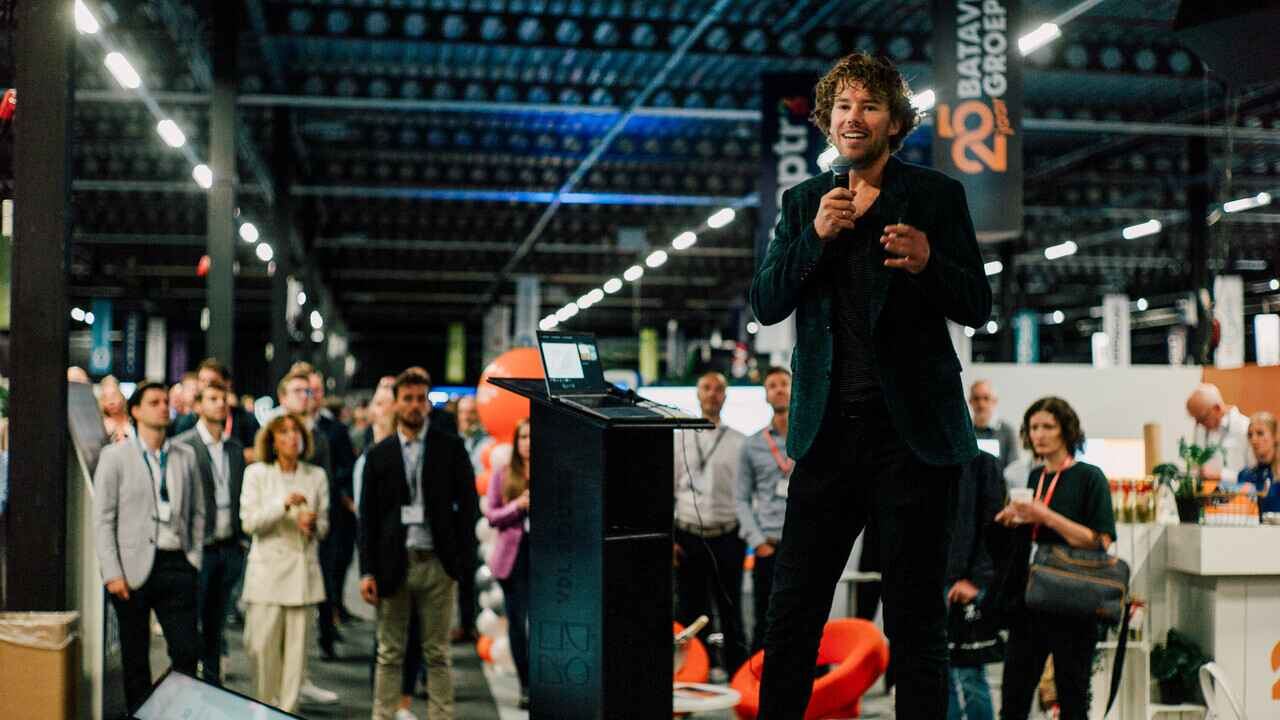

Job van den Berg is an AI keynote speaker, tech entrepreneur and author of five books on AI. He ships AI agents into production every week and delivers 150+ keynotes a year on AI agents and agentic commerce.
What are open weights and closed-source AI models? Discover the differences and the consequences for costs, privacy, data centers and the AI market.
On EditieNL I discussed whether AI could threaten humanity. About Anthropic researcher Evan Hubinger, agentic AI, the black box, and why we are building faster than we understand.
A simple AI video already costs about 4 litres of water and as much electricity as a 10-watt LED lamp burning for 42 hours. What happens with full films and commercials, and why digital is not automatically sustainable.
AI keeps getting better, yet workplace sentiment about AI is deteriorating. Research shows why adoption is as much a social challenge as a technological one: from the Matthew effect to psychological safety.