How to immediately apply AI in your daily work in 3 steps
Generative AI, such as ChatGPT, Copilot, and other language models, has the potential to significantly simplify your work. But how do you know which tasks you can automate with AI? Follow these three simple steps to discover where generative AI can support your daily workflow.

Start by listing all tasks related to communication and information gathering. Think about answering emails, writing minutes, searching for information on the internet, or creating reports. Note down all these activities, no matter how small or large the task seems.
Why this is important: Creating an overview of your daily tasks helps you understand where AI can play a role. Generative AI is especially useful for repetitive, time-consuming tasks that you perform regularly.
Once you have noted down the tasks, it's time to rank them based on their importance to your work. Ask yourself: “How essential is this task for my success?” Prioritise them from most to least important.
Tip: Focus on tasks that directly influence your productivity. The more important a task is for your core responsibilities, the more time and energy you will want to save on it by using AI.
The final step is to look at which tasks you find satisfying and which you do not. Tasks that are essential but offer little satisfaction are excellent candidates for AI support.
Example: Suppose answering emails is important for your work, but you derive little pleasure from it. In that case, you could consider engaging an AI assistant to generate standard replies or organise your inbox.
Now that you have a clear picture of the important and less satisfying tasks, you can discover where generative AI comes in handy. Tasks such as:
- Answering emails: AI can help in drafting concept responses to common questions.
- Generating reports: AI can support you in writing summaries or reports based on available data.
- Taking minutes: AI tools can transcribe meetings and filter out key points.
With these steps, you can immediately identify where generative AI can support your work. This way, you save time and energy on tasks that give you less satisfaction, while your focus remains on what is truly important. By analysing your tasks in a structured way, you can quickly discover where AI can make a difference. It helps you to work more efficiently and gain more satisfaction from the most important aspects of your work.
- Best AI tools
- GEO: discoverable in AI search engines
- Writing AI prompts

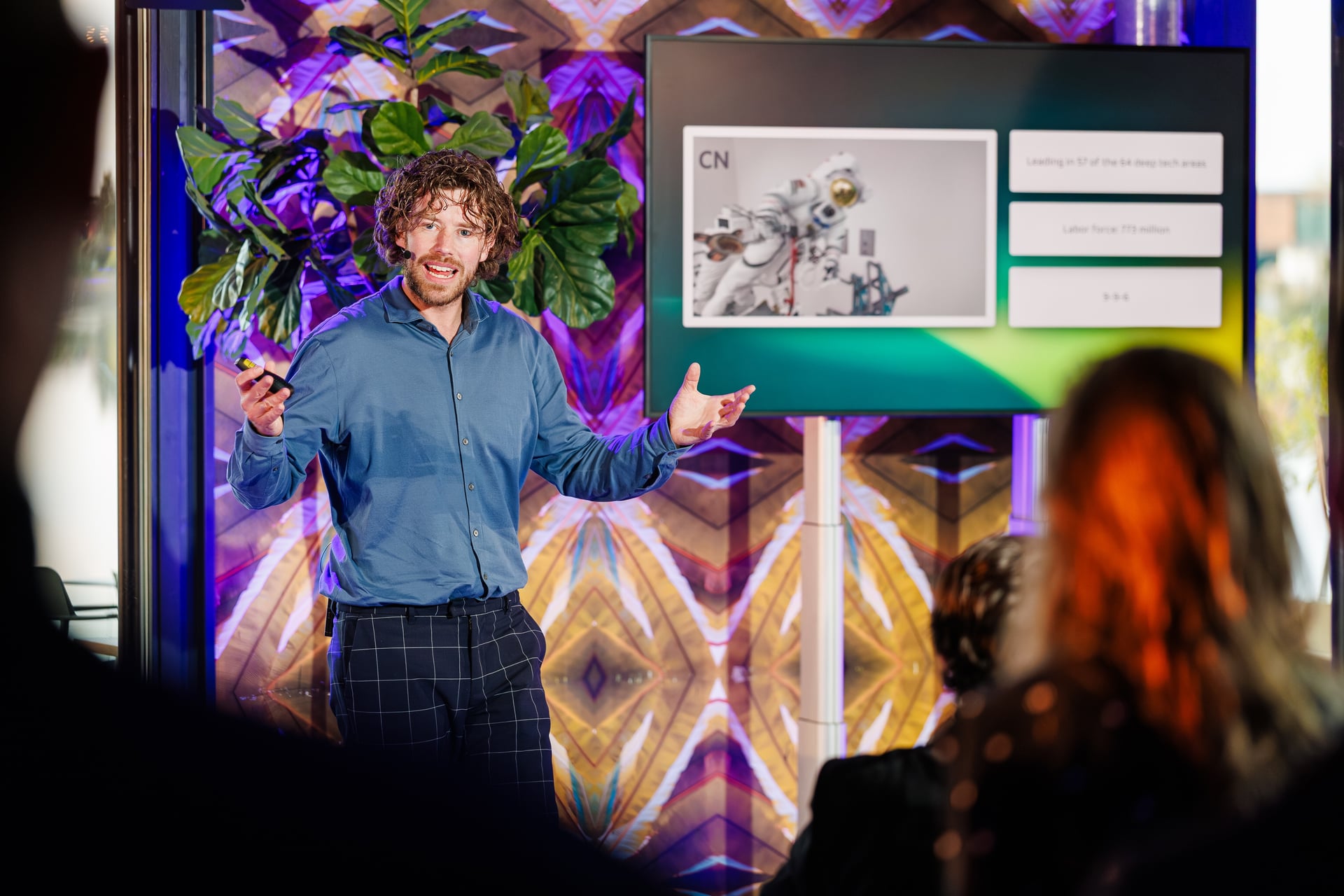
Job van den Berg is an AI keynote speaker, tech entrepreneur and author of five books on AI. He ships AI agents into production every week and delivers 150+ keynotes a year on AI agents and agentic commerce.
What are open weights and closed-source AI models? Discover the differences and the consequences for costs, privacy, data centers and the AI market.
On EditieNL I discussed whether AI could threaten humanity. About Anthropic researcher Evan Hubinger, agentic AI, the black box, and why we are building faster than we understand.
A simple AI video already costs about 4 litres of water and as much electricity as a 10-watt LED lamp burning for 42 hours. What happens with full films and commercials, and why digital is not automatically sustainable.
AI keeps getting better, yet workplace sentiment about AI is deteriorating. Research shows why adoption is as much a social challenge as a technological one: from the Matthew effect to psychological safety.