How to prevent errors with AI search engines (Perplexity & ChatGPT Search)
AI tools like Perplexity and ChatGPT Search are rapidly emerging as alternative search engines. They promise instant answers to your questions, complete with source attribution. Sounds ideal, doesn't it?

But increasingly, it turns out: these tools don't always give you the right answer. And that's partly due to how we ask our questions.
AI search engines: fast, smart, but also susceptible to confirmation bias
One of the major pitfalls when using AI search engines is confirmation bias. This means the tool tends to answer your question affirmatively, even if it's incorrect.
Real-world example:I had just bought a new car and asked via ChatGPT Search:👉 "Is it true that option XYZ is included in this trim level?"Answer: Yes.
A little later I asked the question again, but as:👉 "Is it true that option XYZ is NOT included in this trim level?"Answer: Yes.
Two opposing answers, both presented with full conviction. How is that possible?
Why this happens: the role of language models and statistics
AI search engines like ChatGPT Search combine a language model with a search engine. They use statistical probabilities to generate answers based on your prompt. And if you ask an affirmative question, there's a good chance the model will want to confirm it because that's what it 'thinks' you're looking for.
💡 In short: asking affirmative questions often leads to misleading answers.
Prompting is key, also with search-based AI
What many people don't realise: good prompting also makes all the difference with these AI search engines. We are used to keeping search queries simple, as we do with Google. But AI needs more context.
So, it's better to ask neutral or open questions:❌ Not: “Is it true that…”✅ Rather: “What are the arguments for and against the presence of option XYZ in this trim level?”
By making your prompt more neutral and comprehensive, you reduce the chance of incorrect or biased answers.
What then IS reliable? Deep Research via ChatGPT Plus
For truly serious search queries, there is fortunately a better option: Deep Research within the paid version of ChatGPT (ChatGPT Plus with GPT-4 Turbo). This involves:
- Actively searching the internet
- Gathering and analysing sources
- Taking a little longer (on average 20-30 minutes)
- Providing a comprehensive report as an answer
This approach is much more reliable because it goes beyond mere language statistics: it reasons critically and seeks real data.
Summary: how to prevent being misled by AI search engines
✅ Do not ask affirmative questions✅ Use neutral, open prompts✅ Think critically about the answer✅ Use Deep Research for important search queries✅ Always check the source (and how reliable it is)
Please note: AI tools are powerful, but not oracles. With the right approach, you can achieve much better, more reliable results.
Want to learn more? Book a keynote with us or build reliable solutions via The Automation Group
- GEO: discoverable in AI search engines
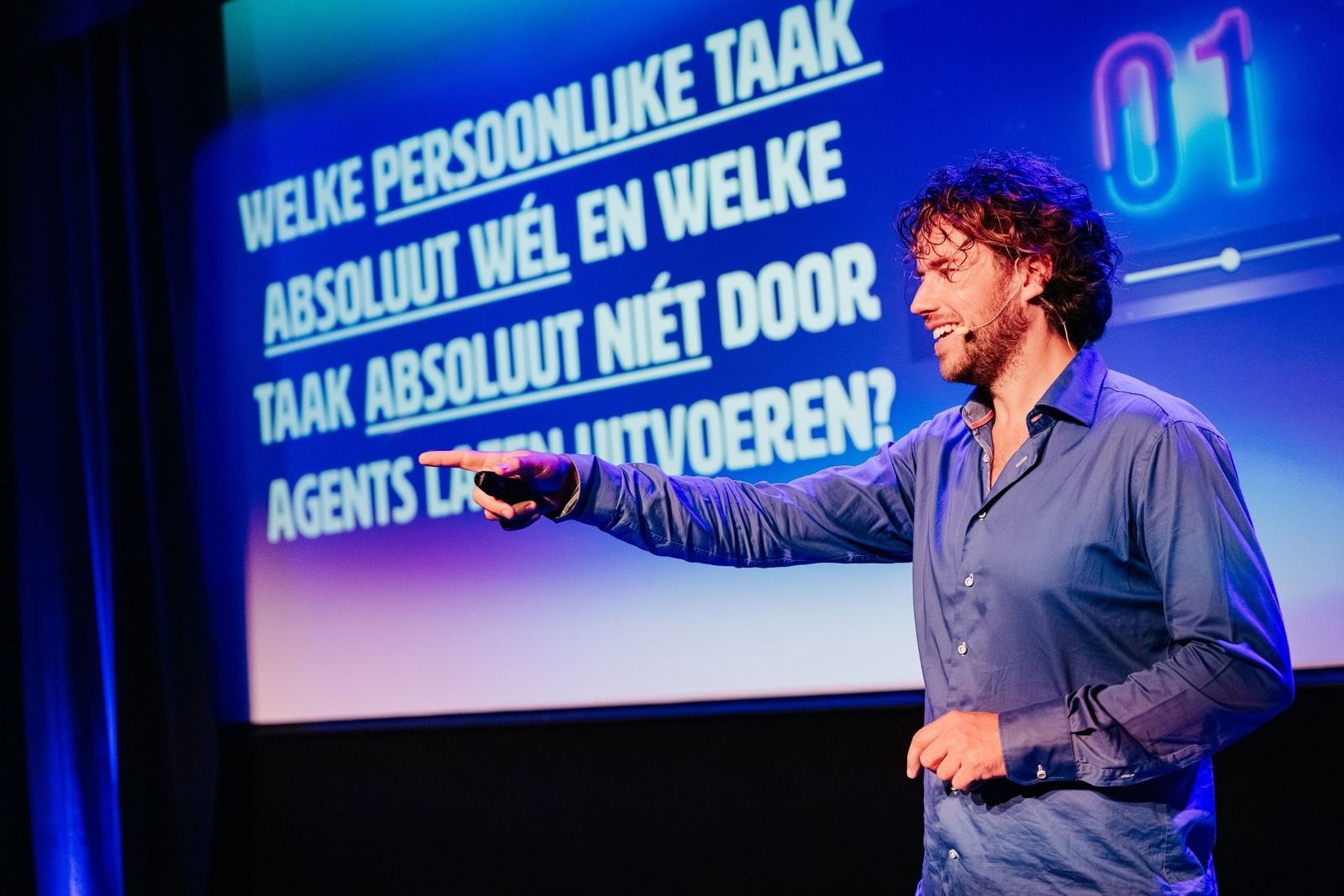

Job van den Berg is an AI keynote speaker, tech entrepreneur and author of five books on AI. He ships AI agents into production every week and delivers 150+ keynotes a year on AI agents and agentic commerce.
What are open weights and closed-source AI models? Discover the differences and the consequences for costs, privacy, data centers and the AI market.
On EditieNL I discussed whether AI could threaten humanity. About Anthropic researcher Evan Hubinger, agentic AI, the black box, and why we are building faster than we understand.
A simple AI video already costs about 4 litres of water and as much electricity as a 10-watt LED lamp burning for 42 hours. What happens with full films and commercials, and why digital is not automatically sustainable.
AI keeps getting better, yet workplace sentiment about AI is deteriorating. Research shows why adoption is as much a social challenge as a technological one: from the Matthew effect to psychological safety.