AI Supervision: More than just rules, embedded in the business
For many organisations, the immediate inclination with AI is to think primarily in terms of rules, policies, and risks. This reflex is understandable, especially now that the EU AI Act imposes strict requirements. However, AI supervision goes beyond a legal checklist. It's about embedding it into daily practice: in processes, in roles, and in decision-making.
Just as data governance is no longer confined to one department but is intertwined with finance, marketing, and operations, AI supervision must also be integrated throughout the entire organisation. Only then will it be effective in practice.
Four pillars of supervision in the business
1. Ownership within the business line
Supervision only works if the business itself owns the AI applications it uses. A customer service department deploying an AI assistant is therefore also responsible for the quality, monitoring, and incident management of that assistant. Not IT or Risk. This keeps supervision close to the impact and the value.
2. Supervision throughout the product lifecycle
Supervision must be embedded in the way you develop and manage products or services. This means:
- Before launch: registration of each AI application in an AI register (purpose, data, owner, risk, supplier).
- Before going live: an impact check explicitly weighing risks such as discrimination, data usage, and dependency.
- In production: monitoring of performance, bias, and data drift with automatic alerts.
- In case of incidents: an established process for escalation and correction, just as with security or privacy incidents.
3. Transparency and accountability
Supervision requires that decisions are traceable and explainable. For an AI model that assesses leads, it must be clear why a lead scores high or low. There must always be an option to overrule a decision. This enables both internal adjustment and external accountability.
4. Collaboration across the three lines of defence
Supervision works best in a multi-track model:
- First line (business): owner and executor.
- Second line (risk, legal, security): sets frameworks, advises, and reviews.
- Third line (audit): independently verifies whether agreements are adhered to.
Practical example
A customer service department deploys an AI assistant to answer customer emails more quickly. Supervision then means that:
- The team leader is the owner and responsible for monitoring and incidents.
- AI performance is part of the weekly KPI review alongside NPS and waiting times.
- IT ensures that the tool is technically stable and receives updates.
- Risk periodically checks whether the AI still complies with privacy and data usage frameworks.
- Audit later verifies whether all agreements and processes have been followed.
This makes supervision a concrete part of the customer process and not a standalone compliance activity.
Why this works
By embedding supervision in the business, you prevent rework and delays later on. Teams know exactly what steps to take, decisions are quicker, and the organisation demonstrates reliability to customers, partners, and regulators. Supervision is therefore not a hindrance, but a way to foster controlled and scalable innovation.
Conclusion
AI supervision demands more than just rules. It requires ownership within the business line, embedding in processes, transparency, and collaboration between business, IT, and risk. Only then can supervision emerge that both mitigates risks and enables innovation.
- Responsible AI use

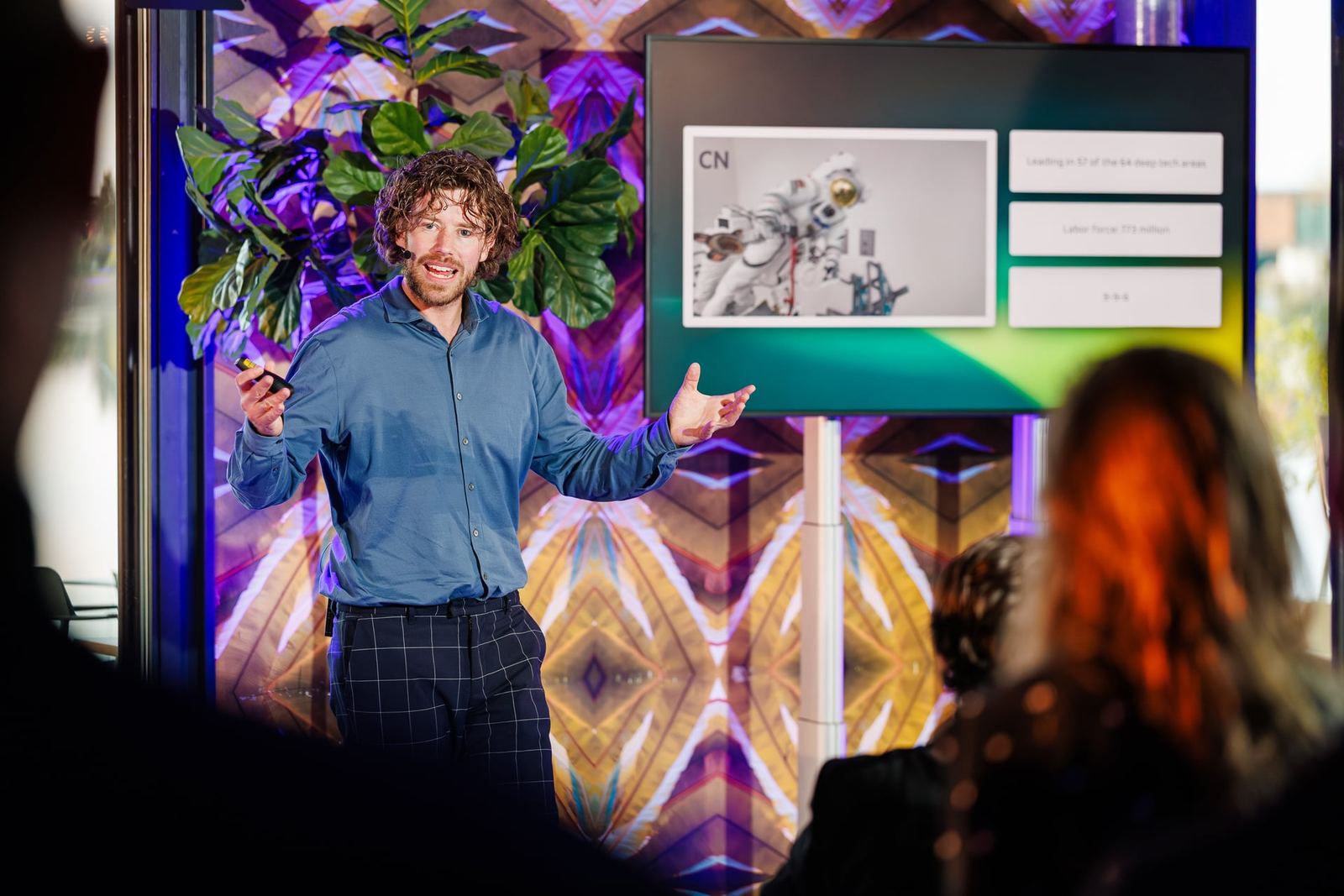
Job van den Berg is an AI keynote speaker, tech entrepreneur and author of five books on AI. He ships AI agents into production every week and delivers 150+ keynotes a year on AI agents and agentic commerce.
What are open weights and closed-source AI models? Discover the differences and the consequences for costs, privacy, data centers and the AI market.
On EditieNL I discussed whether AI could threaten humanity. About Anthropic researcher Evan Hubinger, agentic AI, the black box, and why we are building faster than we understand.
A simple AI video already costs about 4 litres of water and as much electricity as a 10-watt LED lamp burning for 42 hours. What happens with full films and commercials, and why digital is not automatically sustainable.
AI keeps getting better, yet workplace sentiment about AI is deteriorating. Research shows why adoption is as much a social challenge as a technological one: from the Matthew effect to psychological safety.