Research shows: AI is growing, but support is declining
In 2019, 81 percent of employee reviews mentioning AI were positive. In 2026 that is only 43 percent, while 53 percent are now negative. A development we must take seriously.

AI keeps getting better, but sentiment about AI in the workplace seems to be deteriorating. That makes the recent Glassdoor figures both interesting and worrying. In 2019, 81 percent of employee reviews mentioning AI were positive. In 2026 that is only 43 percent, while 53 percent are now negative. That is a development we must take seriously.
The promise: room for meaningful work
At the same time, I am convinced that we urgently need AI: to become more productive, to absorb labor market shortages and to address societal challenges. At The Automation Group I see every day what the positive impact of AI and AI agents can be. It is not only about working faster or cheaper. In many projects we see repetitive and administrative tasks disappear, giving employees more time for customers, advice, collaboration and human contact. Work shifts toward activities closer to an organization's values and purpose. To me, that is one of the most important promises of AI: technology that gives people room to do more of the work that truly matters.
The Matthew effect: those ahead pull further ahead
But that positive outcome does not happen by itself. Scientific research points to several mechanisms that can explain why AI can also lead to more inequality and resistance. One is the so-called Matthew effect: people who already have more knowledge, skills, autonomy or access to technology can leverage new technology faster, further increasing their lead. Recent research even speaks of an AI-specific Matthew Effect.
At the same time, research by Erik Brynjolfsson, Danielle Li and Lindsey Raymond among more than 5,000 customer service employees shows that generative AI can help less experienced and lower-performing employees the most. That is an important nuance. AI can narrow differences between employees, but also widen them. The technology itself does not determine that. The way we introduce AI within organizations, make it accessible and teach people to work with it is crucial.
Organizational culture as a second explanation
A second explanation therefore lies in organizational culture. In many organizations, the frontrunners are made most visible: the AI champions, the employees with the best prompts and the most impressive applications. That can be inspiring, but it can also have the opposite effect. For virtually everyone, AI is new. When employees mainly see how far others already are, it can reinforce the feeling that they are falling behind. That can cause insecurity and ultimately resistance.
That is exactly why we need a culture in which people can learn together, ask questions, make mistakes and share experiences. Research on psychological safety has shown for years that teams learn better when employees feel safe to voice uncertainty, experiment and discuss mistakes. In my view, that applies to AI more than anything. We should not only show who is furthest ahead, but above all create conditions in which everyone can learn and develop.
AI adoption is a social challenge
AI adoption is therefore not only a technology, strategy or data question. It is at least as much a social and organizational one. We must prevent AI from becoming a technology with which a small group moves ever further ahead while others drop out. That means investing in broad access, training, time to practice and above all in a culture in which learning together matters more than showing who is in front.
That is why in my keynotes, alongside the practical application of AI, AI agents, strategy and the data foundation, I devote increasing attention to another theme: AI for equality, not polarization. From artificial intelligence to human progress.
Because ultimately, the most important question is not only what AI technically makes possible. The question is above all who benefits from that progress, who risks being left behind and how we ensure that AI brings people closer to meaningful work, customers, each other and the purpose of their organization.
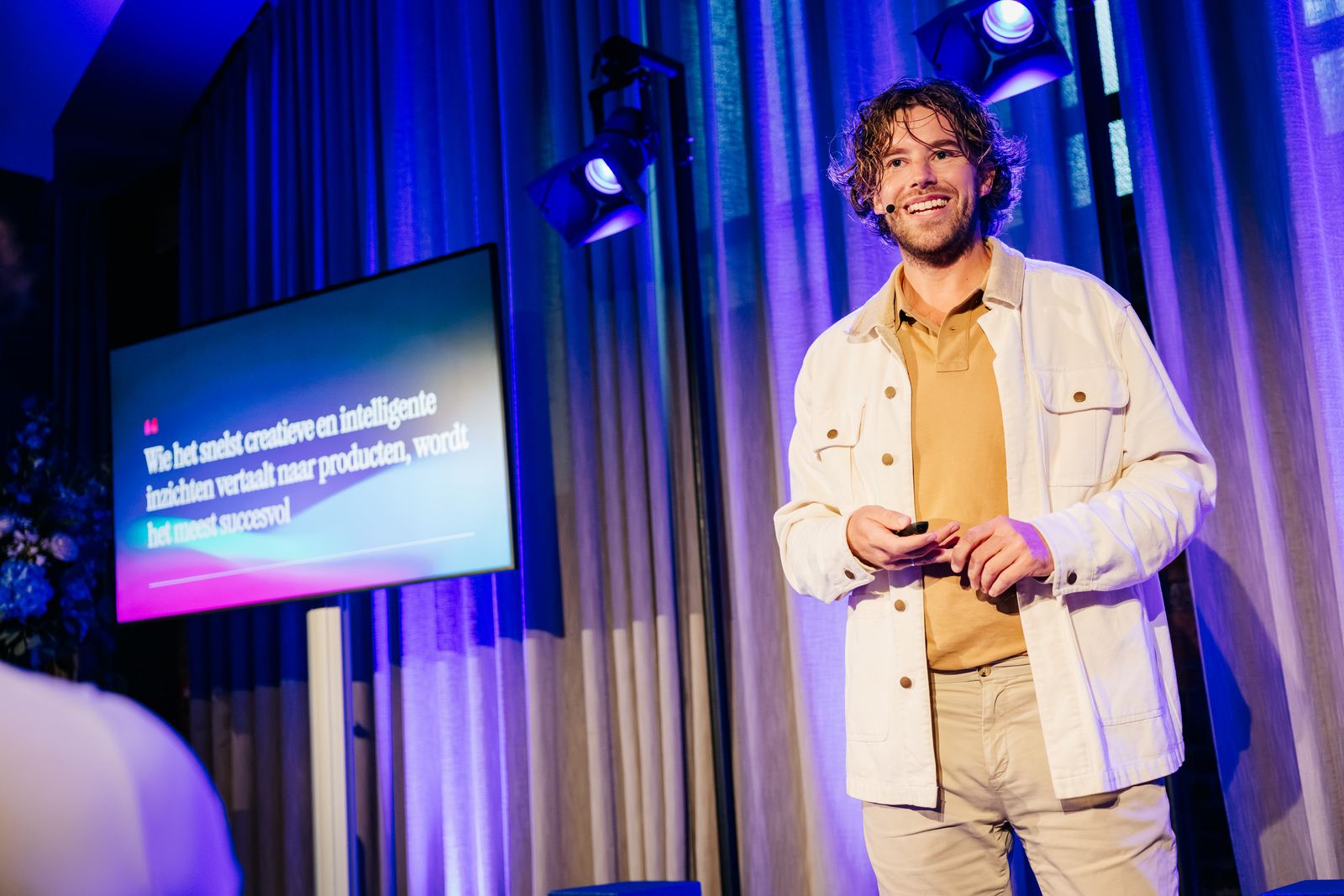

Job van den Berg is an AI keynote speaker, tech entrepreneur and author of five books on AI. He ships AI agents into production every week and delivers 150+ keynotes a year on AI agents and agentic commerce.
The short answer: by being able to say, at any moment, what each agent does, which model it runs on, which data it works with and since when. If you don't know that, you can't call an agent safe, however good the technology around it is. You capture that overview in a passport per agent, which you update with every change and review every quarter. Below is how that works and why it is more than paperwork.
Intelligent AI agents need a reliable data foundation. Identity resolution, Customer 360, data orchestration and governance: from a single source of truth to a system of context.
Top brain, workhorse or sprinter? Choose the right AI model for each task and balance quality, speed and cost with smart AI-agent orchestration.
AI can accelerate archive research, but it can also invent missing facts convincingly. How to combine the right model, strict instructions and critical verification for reliable genealogy research.