The hidden climate impact of an AI video
AI video gives creators enormous creative possibilities. But behind every generated scene lies a hidden bill: water, energy and compute.

AI video is evolving rapidly and offering creators ever more creative possibilities. Images that only a few years ago required large production teams, elaborate sets and high budgets can now be produced in a short time with generative AI. Yet one important aspect is often overlooked: the amount of energy and water needed to generate all those images.
Four litres of water for one AI video
A simple AI video, like many people have made by now, costs approximately 4 litres of water and consumes about as much electricity as a 10-watt LED lamp burning for 42 hours, according to research by United Nations University. That may still sound manageable, but it assumes the first prompt immediately produces the desired result, whereas in practice multiple versions are often needed before an image, movement or scene is actually good enough.
A different camera movement, an adjusted character, a new background, a higher resolution or simply an error in the generation can mean the same scene has to be remade. As a result, the final energy and water consumption is often significantly higher than for a single generation.
For a full production, consumption quickly adds up
When generative AI is used not just for a short clip but for an entire commercial, series or film, total consumption can become substantial. Especially for productions generating large amounts of high-resolution footage, for example in 4K, enormous computing power is required. Energy consumption can then rise to levels comparable to the usage of a small community or village, depending on the scale of the production, the model used and the number of generated versions.
At the same time, AI can also save resources in other parts of a production. Digital actors do not need to travel, physical sets can be smaller, crews can potentially be reduced and certain locations no longer need to be visited. Yet that does not automatically make a fully digital production more sustainable, because part of the environmental burden simply shifts from the physical world to data centres, electricity use and water consumption for cooling computer systems.
Digital does not automatically mean sustainable
That is where an important point of attention lies. With traditional film productions, climate costs are relatively visible: flights, trucks, lighting rigs, sets and large crews are tangible and therefore easier to include in a sustainability calculation. With AI productions, much of the impact happens behind the scenes, in data centres often hundreds or thousands of kilometres away.
As a result, it is easy to get the impression that a digital production is automatically cleaner or more efficient. In reality, that depends heavily on the technology used, the amount of computing power, the energy source of the data centre, the cooling system and especially the number of generations needed to reach the final result.
Climate costs must also become part of the conversation
As generative AI plays an increasingly large role in film, advertising and media, we must therefore look not only at what is technically and creatively possible, but also at the climate costs involved. The question should not only be what we can make with AI, but also how much energy, water and computing power are needed to achieve that result.
That does not mean we should use AI less or slow down innovation. It does mean that awareness of energy and water consumption must become part of the choices made by creators, producers and companies. Precisely because the creative possibilities are so great and usage is likely to increase in the coming years, it is important that sustainability is included from the start.
Digital is not automatically sustainable. The bigger the role of AI in our creative industry becomes, the more important it is to look not only at the end result, but also at what was needed to make it.
Conclusion
Digital is not automatically sustainable. The bigger the role of AI in our creative industry becomes, the more important it is to look not only at the end result, but also at what was needed to make it. That starts with an honest look at the consumption behind the generation and ends with sustainability as a natural part of every creative choice.
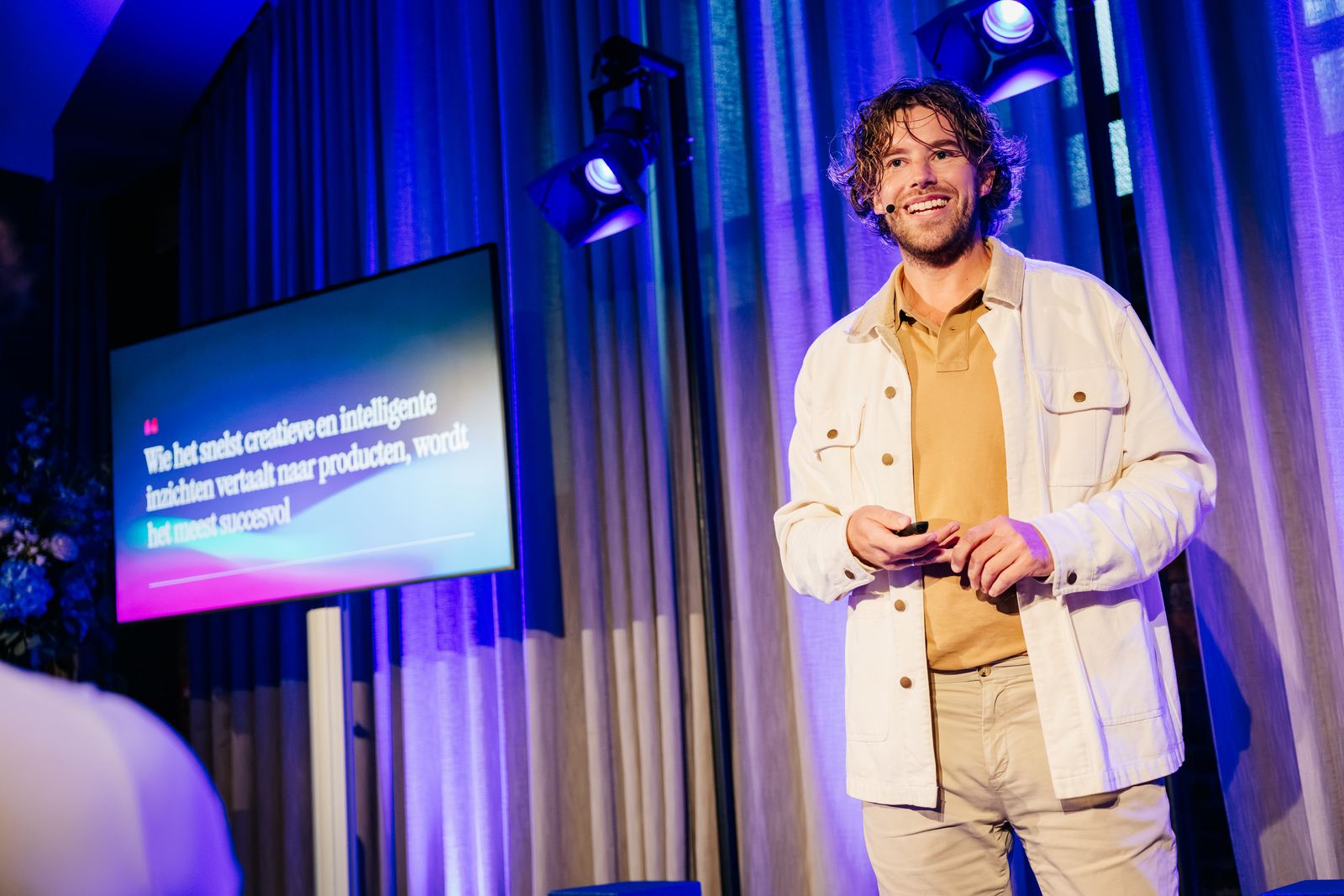

Job van den Berg is an AI keynote speaker, tech entrepreneur and author of five books on AI. He ships AI agents into production every week and delivers 150+ keynotes a year on AI agents and agentic commerce.
The short answer: by being able to say, at any moment, what each agent does, which model it runs on, which data it works with and since when. If you don't know that, you can't call an agent safe, however good the technology around it is. You capture that overview in a passport per agent, which you update with every change and review every quarter. Below is how that works and why it is more than paperwork.
Intelligent AI agents need a reliable data foundation. Identity resolution, Customer 360, data orchestration and governance: from a single source of truth to a system of context.
Top brain, workhorse or sprinter? Choose the right AI model for each task and balance quality, speed and cost with smart AI-agent orchestration.
AI can accelerate archive research, but it can also invent missing facts convincingly. How to combine the right model, strict instructions and critical verification for reliable genealogy research.