Stop digital Twister: AI as your new operating system
We play digital Twister all day long with dozens of apps. The solution isn't yet another tool, but a single AI agent as a central operating system for your work

At the office, we actually play an invisible, digital Twister all day long. You start your workday cheerfully in your email with your left hand, stretch out to a complicated Excel file, frantically search for the right fields in the CRM system, quickly grab an outdated document from SharePoint with your left foot, and then awkwardly twist back to Microsoft Teams. And you repeat that pattern dozens of times a day. No wonder everyone is exhausted by the end of the week.
From tool-hopping to a single point of contact
We can't ignore it: the introduction of generative AI has significantly sped up a huge amount of office work. We write texts faster, we summarise lengthy meetings in a few seconds, and we sift through large amounts of data as if it's nothing. Fantastic. But if you look soberly at our behaviour, we still often move from application to application. We engage in endless tool-hopping. In fact, over the past two years, we've simply added another twenty separate AI applications to our overcrowded desktop.
I am therefore firmly convinced that we have reached the limit of this model. The next, fundamental step simply isn't yet another new AI tool for a specific digital trick. No, the real leap forward is about consolidating things: we're moving towards a single central point of contact.
Roberto: our own AI Operating System for the radio show
To not just preach theory, we at ai.nl always test these kinds of concepts on ourselves first. For our weekly radio show, we have therefore built our very own 'AI Operating System'. We've given this digital colleague the name 'Roberto'. Roberto is a robust AI agent that we have trained based on our own tried-and-tested scripts, the show's formats, and our established editorial processes.
This AI agent now acts as our absolute, central point of contact. If we want something, we go to Roberto. We communicate exclusively with him, in plain, direct human language. Roberto then quickly communicates in the background with all sorts of other sub-agents, databases, and software packages. For example, he arranges alignments, sends out briefings, and retrieves the necessary documents from our cloud storage.
As a result, we no longer have to think about exactly where certain information is stored, or which software tool we need to start to tick off a specific task. We send our commands to one agent, while the technology distributes the dirty work in the background. I can tell you: in practice, that feels fundamentally different from working with ten open tabs. There's immediately less digital Twister. Complete focus on the work itself finally returns. For us, that is the incredibly practical meaning of 'AI as an Operating System'.
Why the SaaS stack is under pressure
This idea is bubbling up everywhere in the tech sector, and the consequences will be immense. We are on the verge of a drastic simplification, and major players have long seen this coming. Just listen to Satya Nadella, the CEO of Microsoft. In late 2024, in an engaging conversation on the BG2 podcast with investors Bill Gurley and Brad Gerstner, he stated that the classic array of SaaS applications would simply 'collapse'. His point was crystal clear: AI agents are rapidly taking over business logic. If a smart agent can query and operate a database via an API, why spend hours learning and operating an expensive platform full of complex buttons and menus?
We see the same aggressive shift at giants like ServiceNow. During the Knowledge 2025 keynote (May 2025), the billion-dollar company firmly positioned itself as 'the AI operating system for the enterprise'. And there, too, almost literally the same hard conclusion about the near future is drawn: 'the traditional app stack will collapse'. Behind the scenes, smart vendors are transforming their complex software into invisible services that simply cooperate with your overarching AI agent.
What this means for your organisation
Are we going to cancel all our software licenses tomorrow morning? No. But the difficult transition from separate applications to a central AI layer is definitely underway. If you don't want to be caught out, take these pragmatic steps today:
- Stop collecting useless tools: Critically examine your insane landscape of subscriptions. Do you really need a separate graphical interface for every minuscule business process, or can a cleverly configured AI handle this task via the back door (API)?
- Document your processes thoroughly: An AI agent is powerful, but certainly not clairvoyant. Our 'Roberto' only delivers accurate work because we have documented the workflow of our radio show extremely precisely. No agent functions without a process.
- Start locally and experiment immediately: Build a relatively simple, internal overarching agent for a small, defined team. Give people the opportunity to experience on a safe scale how pleasant it is when coordination work is taken off their hands.
- Data quality far outweighs visual embellishment: If your ultimate interface simply consists of a central voice module or one modest chat window, then your underlying data is sacred. Get your SharePoint, CRM, and files in order today. Without a tidy foundation, an agent builds castles in the air.
The time of contorting yourself into all sorts of exhausting digital positions at the office is coming to an end. The real added value of AI will soon be silently under the bonnet. Anyone who stubbornly continues to rely on even more applications, each with their own login screens, will in the near future be playing a completely superfluous game of Twister all by themselves.
- Best AI tools
- GEO: discoverable in AI search engines
- AI-prompts writing
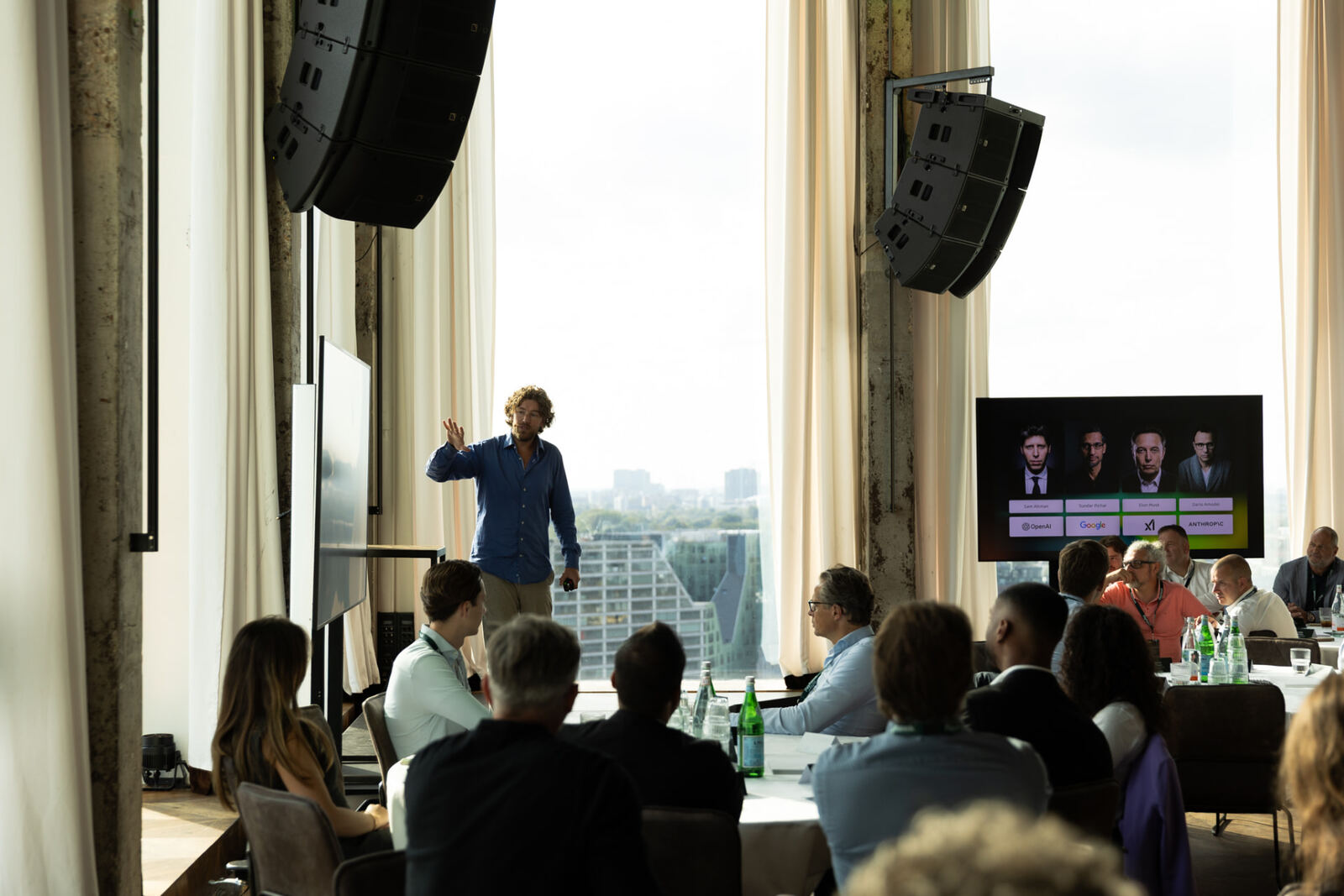
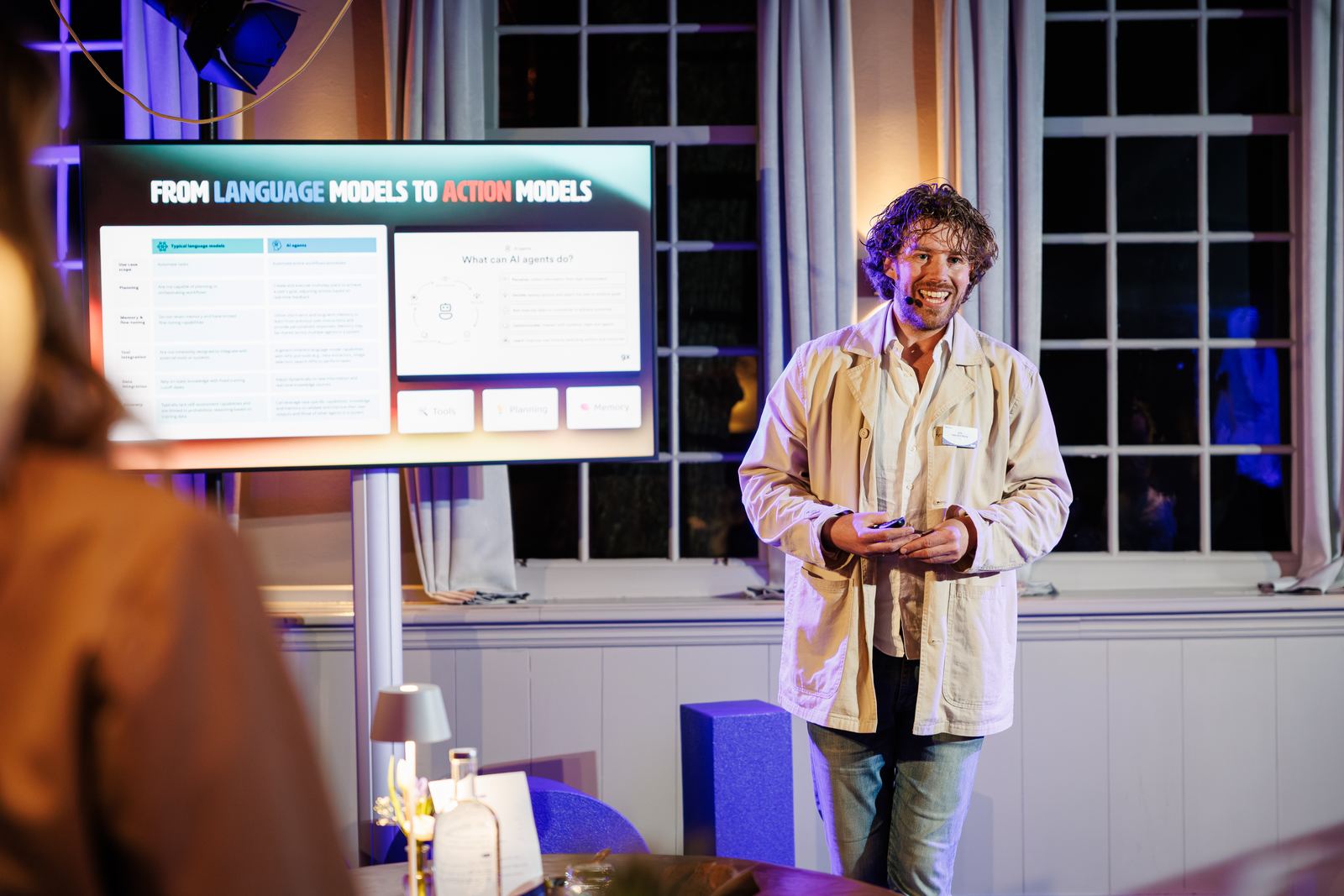
Job van den Berg is an AI keynote speaker, tech entrepreneur and author of five books on AI. He ships AI agents into production every week and delivers 150+ keynotes a year on AI agents and agentic commerce.
What are open weights and closed-source AI models? Discover the differences and the consequences for costs, privacy, data centers and the AI market.
On EditieNL I discussed whether AI could threaten humanity. About Anthropic researcher Evan Hubinger, agentic AI, the black box, and why we are building faster than we understand.
A simple AI video already costs about 4 litres of water and as much electricity as a 10-watt LED lamp burning for 42 hours. What happens with full films and commercials, and why digital is not automatically sustainable.
AI keeps getting better, yet workplace sentiment about AI is deteriorating. Research shows why adoption is as much a social challenge as a technological one: from the Matthew effect to psychological safety.