RPA vs. Generative AI: Which is the best choice for automation?
When it comes to process automation, we often get asked: What's better, RPA (Robotic Process Automation) or the use of generative AI? While it's tempting to see one technology as *the* solution, the real answer lies in a combination of techniques, tailored to the specific challenge.

RPA and Generative AI: What are the differences?
RPA is designed to automate repetitive and structured tasks, such as filling out forms, processing data, and executing workflows. It operates based on clear rules and follows fixed processes.
Generative AI, such as language models, goes a step further. This technology can perform creative and language-related tasks, such as drafting texts, analysing complex datasets, or even communicating with customers. It is particularly powerful in situations where context and variation play a role.
While both technologies have unique strengths, it's not a question of 'either/or', but rather 'both/and'.
The power of combination
Most automation challenges require a mix of technologies:
- RPA for structuring and streamlining repetitive processes.
- Generative AI for tackling language- or context-based tasks.
- Data analysis to recognise patterns and generate insights that support decisions.
By taking a flexible and contextual approach to the challenge, you can deploy exactly the right technologies.
Example: Invoice processing
Imagine an organisation that wants to automate its invoice processing.
- RPA can be used to automatically download invoices and extract the relevant fields.
- Generative AI can help understand exceptions, such as incorrect or unclear data.
- Data analysis can recognise trends in invoices and provide advice on supplier performance.
This example shows that an interplay of technologies often offers the most effective solution.
Solution over technology
At The Automation Group, we believe that technology is a means, not an end in itself. It’s always about the solution: what does the organisation need, and how can technologies contribute to a more efficient process?
That's why we advise organisations to look at technology with a broad perspective and understand its possibilities. By cleverly combining tools and techniques, the most valuable solution emerges.
Conclusion: When it comes to automation, it's not about what's better, RPA or generative AI, but about choosing the right combination of technologies to solve the problem.
Would you like to know how we can help your organisation cleverly deploy technology? Contact us and discover the possibilities!
- Best AI tools
- GEO: discoverable in AI search engines
- Writing AI prompts
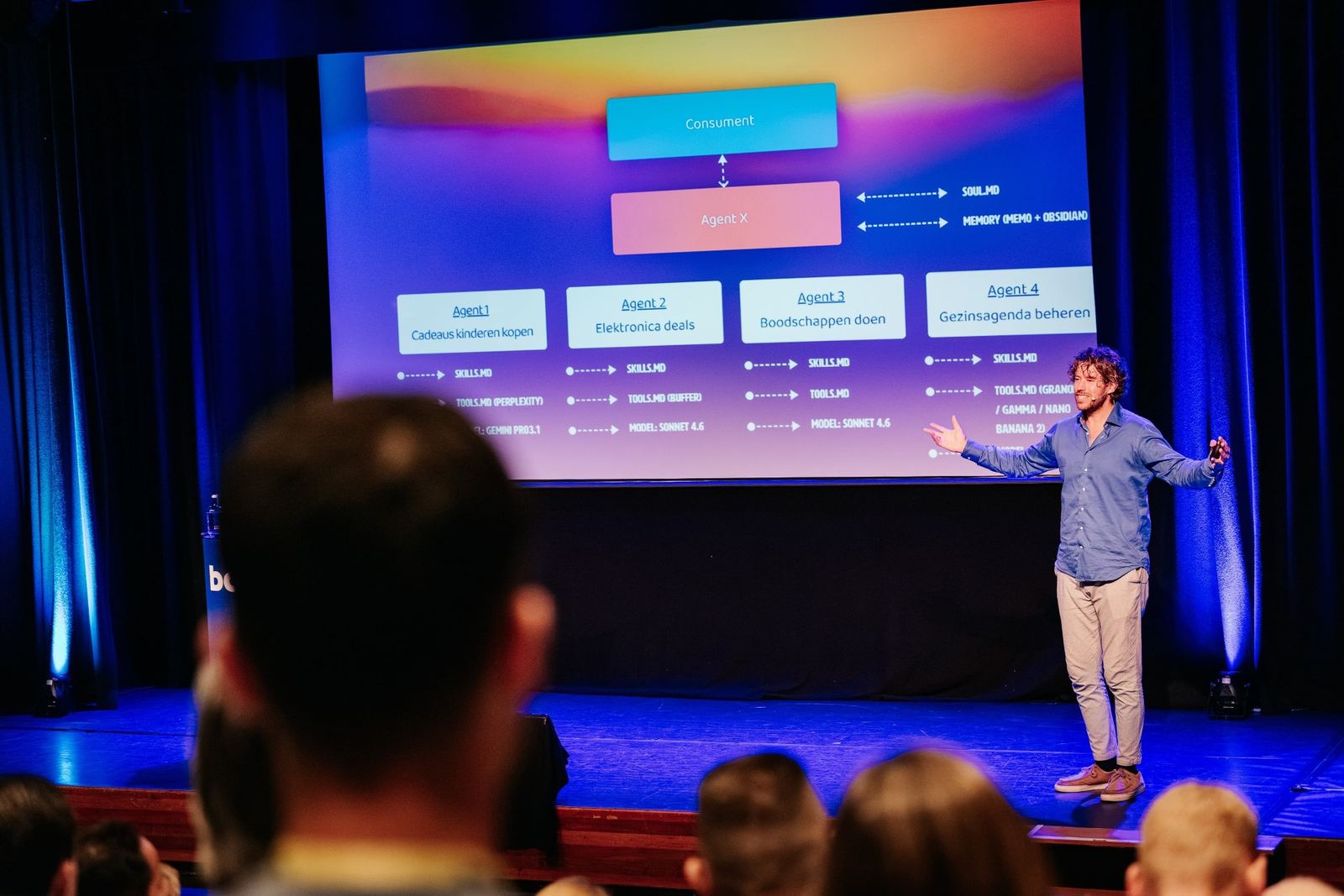

Job van den Berg is an AI keynote speaker, tech entrepreneur and author of five books on AI. He ships AI agents into production every week and delivers 150+ keynotes a year on AI agents and agentic commerce.
What are open weights and closed-source AI models? Discover the differences and the consequences for costs, privacy, data centers and the AI market.
On EditieNL I discussed whether AI could threaten humanity. About Anthropic researcher Evan Hubinger, agentic AI, the black box, and why we are building faster than we understand.
A simple AI video already costs about 4 litres of water and as much electricity as a 10-watt LED lamp burning for 42 hours. What happens with full films and commercials, and why digital is not automatically sustainable.
AI keeps getting better, yet workplace sentiment about AI is deteriorating. Research shows why adoption is as much a social challenge as a technological one: from the Matthew effect to psychological safety.