Discover the Most Valuable AI Opportunity for Businesses
Most organisations are now experimenting with artificial intelligence. Think of AI tools for customer service, content creation, or data analysis. But there is one application that is rarely utilised, yet its impact can be enormous:

👉 Training a language model with your own company data to democratise internal knowledge.
In this article, I will explain what this entails, why it is so powerful, and how you can get started today.
What does it mean to "democratise" knowledge?
Much of the knowledge within organisations resides in three places:
- In the minds of experienced employees
- In unstructured documents spread across SharePoint, Google Drive, or network drives
- In emails, meeting minutes, or systems that are difficult to search
The result?
- You are dependent on specific people
- New employees take a long time to get up to speed
- Historical knowledge (e.g., why a decision was made 5 years ago) is untraceable
Knowledge democratisation means: giving everyone within your organisation easy access to the right information, at the right time.
How AI and language models help with this
Modern Large Language Models (LLMs) like GPT-4 are excellent at understanding large amounts of unstructured text. By combining these models with your internal data and documents, something powerful emerges.
The key: Retrieval-Augmented Generation (RAG)
With RAG, you enrich the language model with real-time access to your own business information. This means:
- You get accurate answers to business-specific questions
- Your data remains secure and within your own environment
- You can build an internal AI knowledge assistant that is available 24/7
Think of questions like:
- “What are the guidelines for client X?”
- “How did we approach that project last year?”
- “What are our agreements on delivery terms?”
What are the concrete benefits?
✅ Efficiency: Employees spend less time searching for information✅ Continuity: Business knowledge is preserved, even with staff turnover✅ Faster onboarding: New colleagues have immediate access to crucial knowledge✅ Better decision-making: Based on existing experience and documents✅ Competitive advantage: You capitalise on the unique knowledge (IP) you have built
Why do so few companies already do this?
Many organisations think this is complex or expensive. But the technology is available, affordable, and safe to implement, provided you approach it correctly.
The key? A reliable AI partner AND the right data structure. Start small, for example, with a specific department or document collection, and then scale up.
Conclusion: Don't miss this AI opportunity
Training a language model with your own company data to unlock knowledge is one of the most underestimated applications of AI. Yet the gains are enormous, both operationally and strategically.
Want to know how? Visit the website of The Automation Group
- Best AI tools
- GEO: discoverable in AI search engines
- Write AI prompts

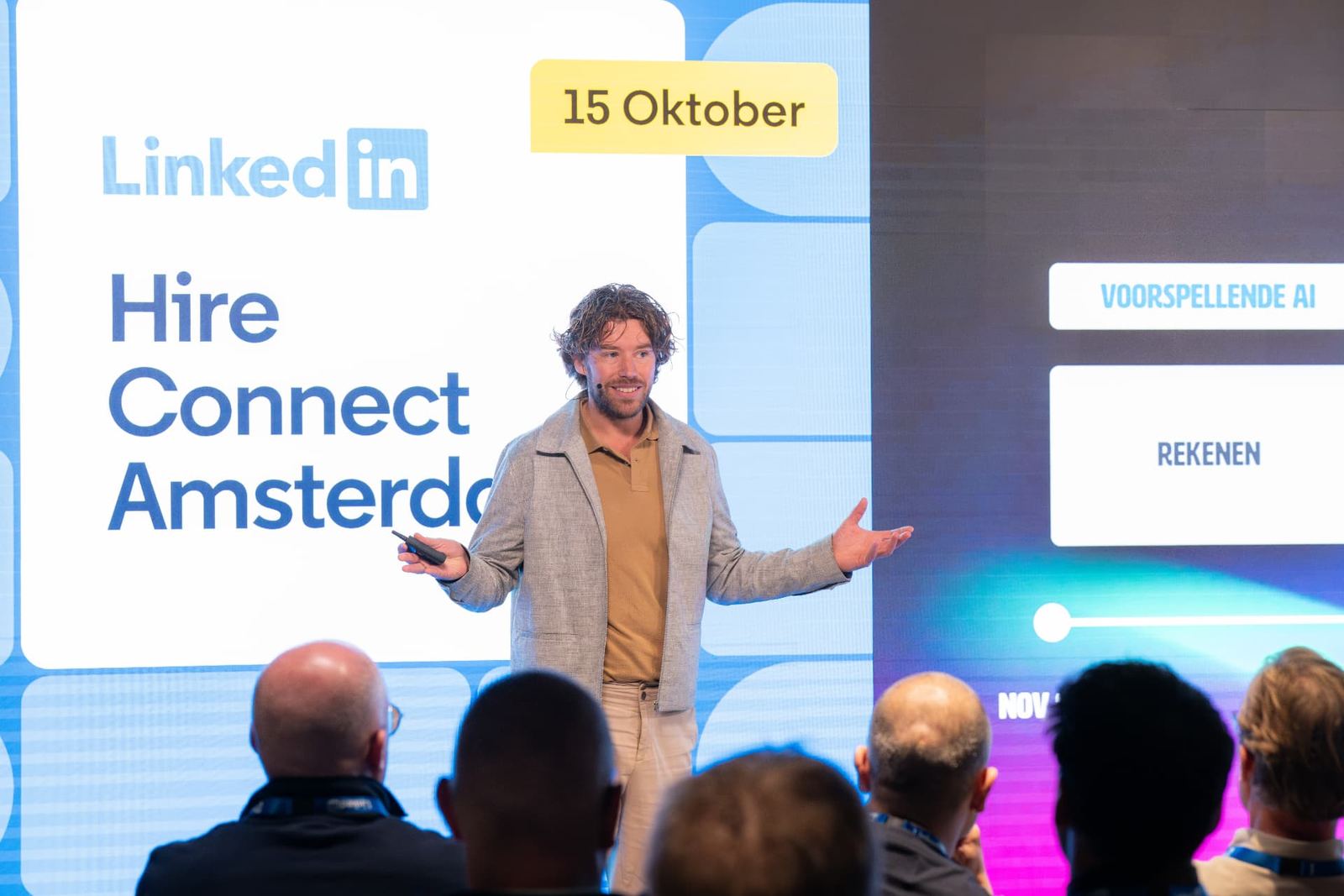
Job van den Berg is an AI keynote speaker, tech entrepreneur and author of five books on AI. He ships AI agents into production every week and delivers 150+ keynotes a year on AI agents and agentic commerce.
The short answer: by being able to say, at any moment, what each agent does, which model it runs on, which data it works with and since when. If you don't know that, you can't call an agent safe, however good the technology around it is. You capture that overview in a passport per agent, which you update with every change and review every quarter. Below is how that works and why it is more than paperwork.
Intelligent AI agents need a reliable data foundation. Identity resolution, Customer 360, data orchestration and governance: from a single source of truth to a system of context.
Top brain, workhorse or sprinter? Choose the right AI model for each task and balance quality, speed and cost with smart AI-agent orchestration.
AI can accelerate archive research, but it can also invent missing facts convincingly. How to combine the right model, strict instructions and critical verification for reliable genealogy research.