Under the Hood of AI: Where the Real Questions Begin
Generative AI provides answers in seconds. But the interesting part only starts when you dare to ask deeper questions.
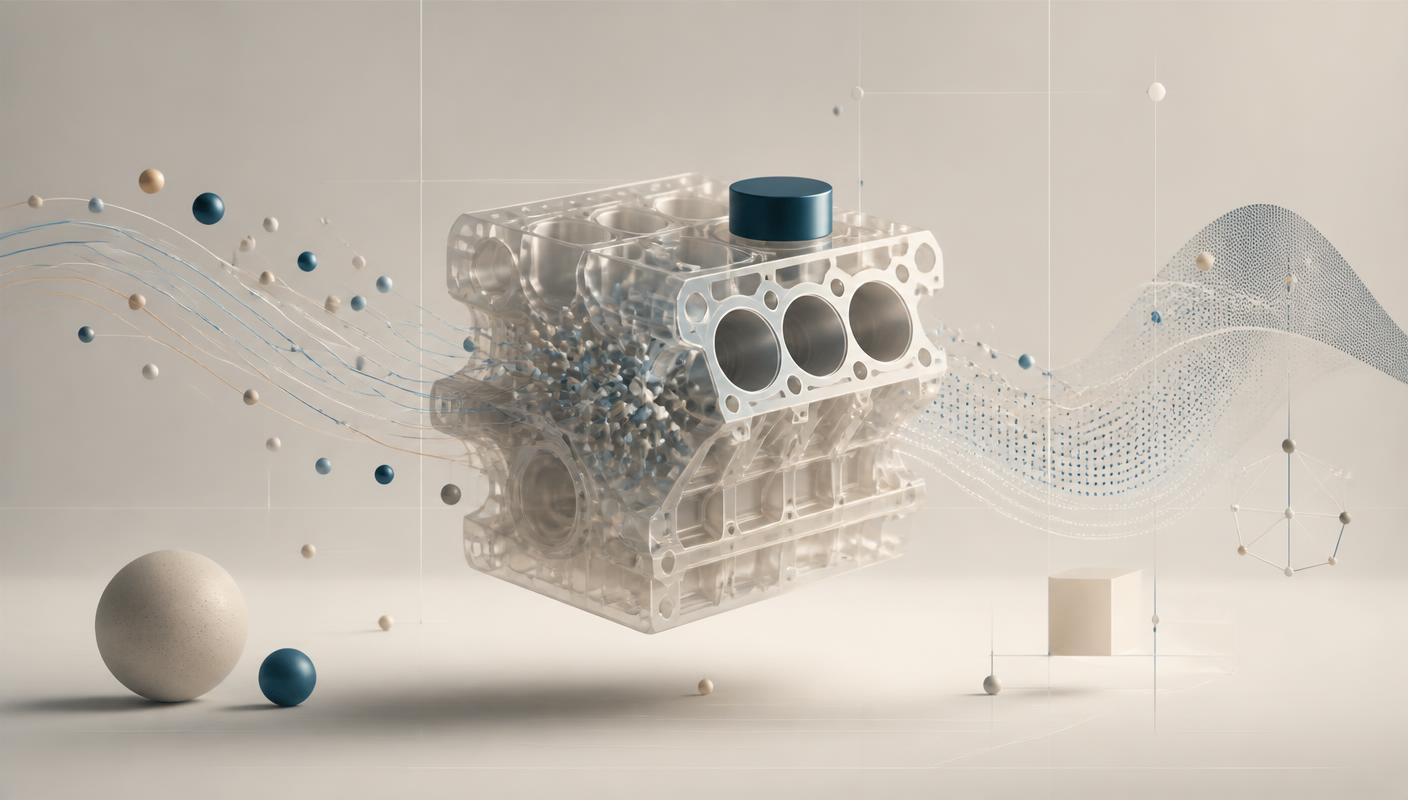
Generative AI provides answers in seconds. But the interesting part only starts when you dare to ask deeper questions.
When I used to build statistical and predictive models myself, there was one component I found perhaps even more interesting than the final outcome: playing with variables.
Taking a variable out. Adding a new one. Seeing what happened to the model. Which relationships held up? Which disappeared? And why did an effect suddenly change once you accounted for something else?
That wasn't a technical trick. It was a way to grasp the mechanisms behind the figures.
Data never gave a complete answer to how the world works. But by experimenting, you could get a slightly better look at it. You saw that a correlation was sometimes less obvious than you thought. Or that something that initially seemed very important hardly had any meaning once you included another factor.
Precisely that process made it interesting.
Not the model's highest score. Not the prettiest dashboard. Not the conclusion on the last slide. But the moment a new hatch opened.
Answers have become more accessible
Much has changed with generative AI.
You no longer need to build a model yourself, wade through tables, or understand how to technically set up an analysis to ask a good question. You formulate a question in plain language and receive an answer, an analysis, a summary, or a proposed approach within seconds.
That's a huge step forward. Many more people can now work with complex information, explore hypotheses, and test ideas. The distance between a question and an initial insight is smaller than ever.
But precisely therein lies a risk.
The allure of a good answer
A well-formulated answer quickly feels like an endpoint. Especially when it's convincingly written, sounds logical, and is neatly structured.
But a convincing answer is not the same as understanding.
The interesting questions often only begin after that:
- What assumptions is this answer based on?
- What information has been included and what is missing?
- What alternative explanation is possible?
- What would change if the context were slightly different?
- What uncertainty lies behind this conclusion?
- What question did we actually not ask?
Previously, you sometimes literally saw that uncertainty in the output of a model: changing coefficients, an effect that disappeared, an unexpected interaction. That almost forced you to remain curious.
With AI, that intermediate layer is often less visible. The interface is pleasant, fast, and human-like. But this also means that some of the friction that helps us think critically disappears.
Looking under the hood
“Looking under the hood” doesn't mean everyone has to become a data scientist, statistician, or programmer.
It does mean that we shouldn't treat the answer as a self-evident final destination.
For example, try asking:
- “What assumptions do you make to arrive at this advice?”
- “What information could fundamentally change this answer?”
- “Come up with three reasons why this conclusion might be incorrect or incomplete.”
These are not technical questions. They are questions that help us think better.
Generative AI can be very valuable in this regard. Not just as an answer machine, but as a devil's advocate, a hypothesis generator, and a tool to reveal blind spots.
The value of curiosity
For me, the power of statistics was never just about prediction. It was about practicing curiosity.
A model was not an oracle. It was a way to have a conversation with the data. You asked a question, received a clue in return, adjusted something, and discovered that new questions arose.
That attitude has perhaps become even more important now that AI produces answers so effortlessly.
So, feel free to use AI to work faster, develop ideas, and make complex information accessible. But occasionally and consciously open the hatch under the hood.
Not because the answer is always there.
But because that's often where the question that truly matters arises.
Job van den Berg is an AI keynote speaker, tech entrepreneur, and author of five books on AI. He puts agents into production himself weekly and gives 150+ keynotes per year on AI agents and agentic commerce.
Counting Cybertrucks in the back seat is not representative research. But it is a perfect example of how statistics, logical thinking, and AI come together: observe, formulate hypotheses, and above all, try to debunk them.
After half a year back in Silicon Valley, one thing stands out: the conversation is shifting from 'what can AI do?' to 'how do we truly build on it?'. Billboards about safe AI, control, and infrastructure show a new theme.
Hallucinations can be controlled. Much harder is a reasoning that sounds logical, is partly supported by research, yet goes further than the evidence allows. About generational differences, statistics, and methodological caution as an AI skill.
The promise of AI agents is friction gone, ease first. But precisely in that friction, the contact that forges our social capital always emerged. An essay on connection, technology, and the default setting.
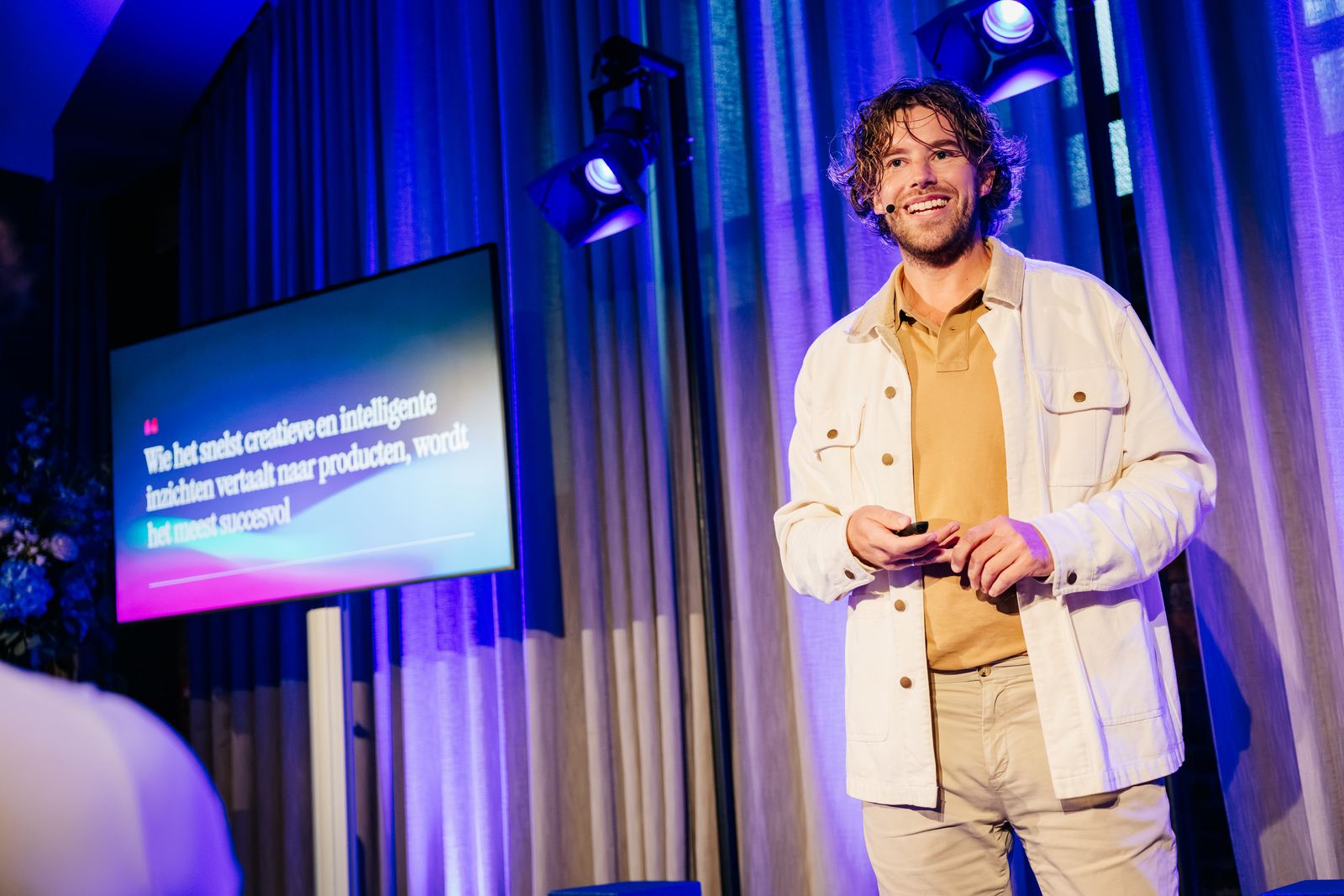

Job van den Berg is an AI keynote speaker, tech entrepreneur and author of five books on AI. He ships AI agents into production every week and delivers 150+ keynotes a year on AI agents and agentic commerce.
AI can accelerate archive research, but it can also invent missing facts convincingly. How to combine the right model, strict instructions and critical verification for reliable genealogy research.
GPUs do the model math, CPUs keep the rest of the agent running. Why agentic AI shifts the view of data centers, and what that means for Intel, AMD and organizations deploying agents.
What are open weights and closed-source AI models? Discover the differences and the consequences for costs, privacy, data centers and the AI market.
On EditieNL I discussed whether AI could threaten humanity. About Anthropic researcher Evan Hubinger, agentic AI, the black box, and why we are building faster than we understand.