Knowledge is essential for working effectively with AI
The rise of generative AI has led to a widespread misconception: that technology will render us, as humans, redundant. Nothing could be further from the truth. While AI is becoming increasingly sophisticated, human knowledge and expertise remain crucial for effectively utilising this technology.

The rise of generative AI has led to a widespread misconception: that technology will render us, as humans, redundant. Nothing could be further from the truth. While AI is becoming increasingly sophisticated, human knowledge and expertise remain crucial for effectively utilising this technology. In this article, we delve deeper into why knowledge is essential for working with AI and how it can empower us rather than replace us.
The misconception surrounding generative AI
Many people believe that generative AI, such as language models and content generators, makes human input superfluous. However, this line of thinking ignores an important aspect: without the right knowledge and skills, AI cannot be optimally deployed. AI is a tool that, like previous technological innovations, relies on human guidance and expertise.
When the calculator was introduced, there were concerns that mathematical skills would disappear. However, without a basic understanding of mathematics, a calculator is just a device with buttons. It is the user's knowledge that makes the calculator effective. Similarly, the sawmill transformed woodworking. Without knowledge of wood types, sawing techniques, and safety, using a sawmill is not only ineffective but also dangerous. An inexperienced user can seriously injure themselves or damage the material.
Without knowledge, you'll soon be found out
AI tools can produce impressive results, but without the right context and knowledge, this can lead to incorrect or meaningless output. Someone without programming knowledge who uses AI to generate code will likely encounter errors they cannot solve. Recent research shows that people without any background knowledge who deploy AI often encounter problems and achieve inefficient results. They lack the expertise to evaluate and optimise the AI's output, leading to suboptimal or even detrimental outcomes.
On the other hand, professionals with in-depth knowledge can exponentially enhance their skills by integrating AI into their work. An experienced software developer can use AI to write code faster, detect errors, and devise innovative solutions that were previously unattainable.
Take a web developer with years of experience. By using AI, they can automate repetitive tasks, solve complex problems more quickly, and dedicate more time to the creative and strategic aspects of their profession. Here, AI serves as a powerful tool, not as a replacement.
It is understandable that professionals may feel uncertain when technology appears to perform certain tasks more efficiently. However, by embracing and integrating AI into their workflow, they can develop themselves and reach new heights in their careers. The rapidly changing technological landscape underscores the importance of continuous education. By upskilling and staying abreast of the latest developments, you ensure that you remain relevant and valuable in your field.
Knowledge and skills form the basis for effectively using AI technologies. Instead of rendering us redundant, AI offers the opportunity to expand our expertise and elevate our work to a higher level. By viewing technology as a complement to our skills and not as a replacement, we can grow, innovate, and excel in an increasingly digitalised world.
- Best AI tools
- GEO: discoverable in AI search engines
- Writing AI prompts
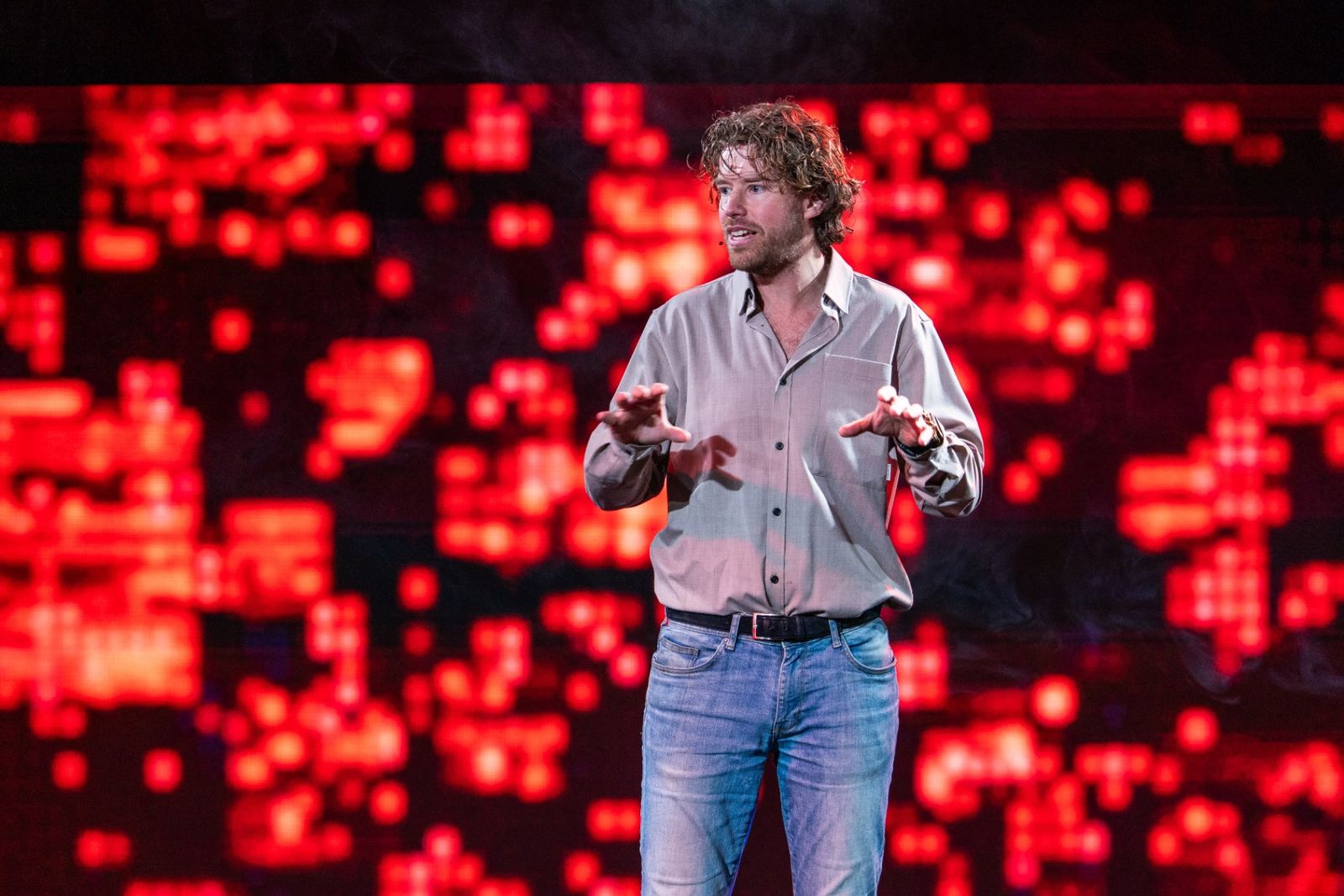

Job van den Berg is an AI keynote speaker, tech entrepreneur and author of five books on AI. He ships AI agents into production every week and delivers 150+ keynotes a year on AI agents and agentic commerce.
What are open weights and closed-source AI models? Discover the differences and the consequences for costs, privacy, data centers and the AI market.
On EditieNL I discussed whether AI could threaten humanity. About Anthropic researcher Evan Hubinger, agentic AI, the black box, and why we are building faster than we understand.
A simple AI video already costs about 4 litres of water and as much electricity as a 10-watt LED lamp burning for 42 hours. What happens with full films and commercials, and why digital is not automatically sustainable.
AI keeps getting better, yet workplace sentiment about AI is deteriorating. Research shows why adoption is as much a social challenge as a technological one: from the Matthew effect to psychological safety.