The "Kasparov Syndrome": What if AI does your job better than you?
In 2025, many of us will experience a painful, but inevitable moment: discovering that AI is better at a task we consider our own expertise. This phenomenon, the "Kasparov Syndrome", will challenge us in a way we haven't experienced before.

What does this mean for us as professionals? And more importantly: how do we deal with it?
What is the Kasparov Syndrome?
The term is inspired by Garry Kasparov, the chess grandmaster who was the best in the world for years. However, in 1997, he was defeated by a chess computer named Deep Blue. It wasn't just a defeat; it was a moment that became a global symbol for the rise of technology surpassing human capabilities.
For Kasparov, the loss was more than a sporting setback. It touched his identity. How do you move on when something you've dedicated your life to is taken over by a machine?
Many professionals will experience this same feeling in the coming years. Perhaps you work in data analysis, write texts, create designs, or make strategic decisions. AI is becoming better and faster in more and more areas, and one day you will have to admit that an algorithm has overtaken you.
A significant part of our professional identity is built around what we are good at. It gives us satisfaction, recognition, and often a sense of control. When a machine takes over that role, it can feel like an attack on who we are. The "Kasparov Syndrome" therefore touches more than our skills: it touches our self-image.
And yet, this moment is inevitable. AI is evolving rapidly and is becoming better than humans in many areas. This applies to technical processes, but just as much to generating insights, making decisions, and even creative processes.
The Power of Adaptability
Although this sounds confronting, there's good news: this doesn't have to mean an end, but a new beginning. It's all about adaptability. The professionals who remain successful in a world dominated by AI are those who know how to collaborate with AI and use it as a powerful tool.
Here are three steps to prepare for your "Kasparov moment":
- Embrace change: Don't see AI as a threat, but as an opportunity. Technology doesn't make your work redundant, but it changes the way you add value.
- Focus on your unique humanity: Creativity, empathy, and strategic thinking remain uniquely human skills. Combine these with the power of AI.
- Keep learning: Make sure you stay up-to-date with technological developments. Understand how AI works and how you can use it in your field.
The reality is that AI is simply better than us in some areas. But that doesn't mean it replaces us entirely. It forces us to think about what our true value is.
This can be an opportunity to grow, to develop new skills, and to approach work smarter and more effectively. The "Kasparov Syndrome" is not an end, but a new chapter. Instead of fearing the rise of AI, it's time to learn how to collaborate with it. The question is not whether you will experience this moment, but how you will deal with it. Let 2025 be the year you adapt and grow stronger in a world where humans and machines complement each other.
- Best AI Tools
- GEO: discoverable in AI search engines
- Writing AI prompts
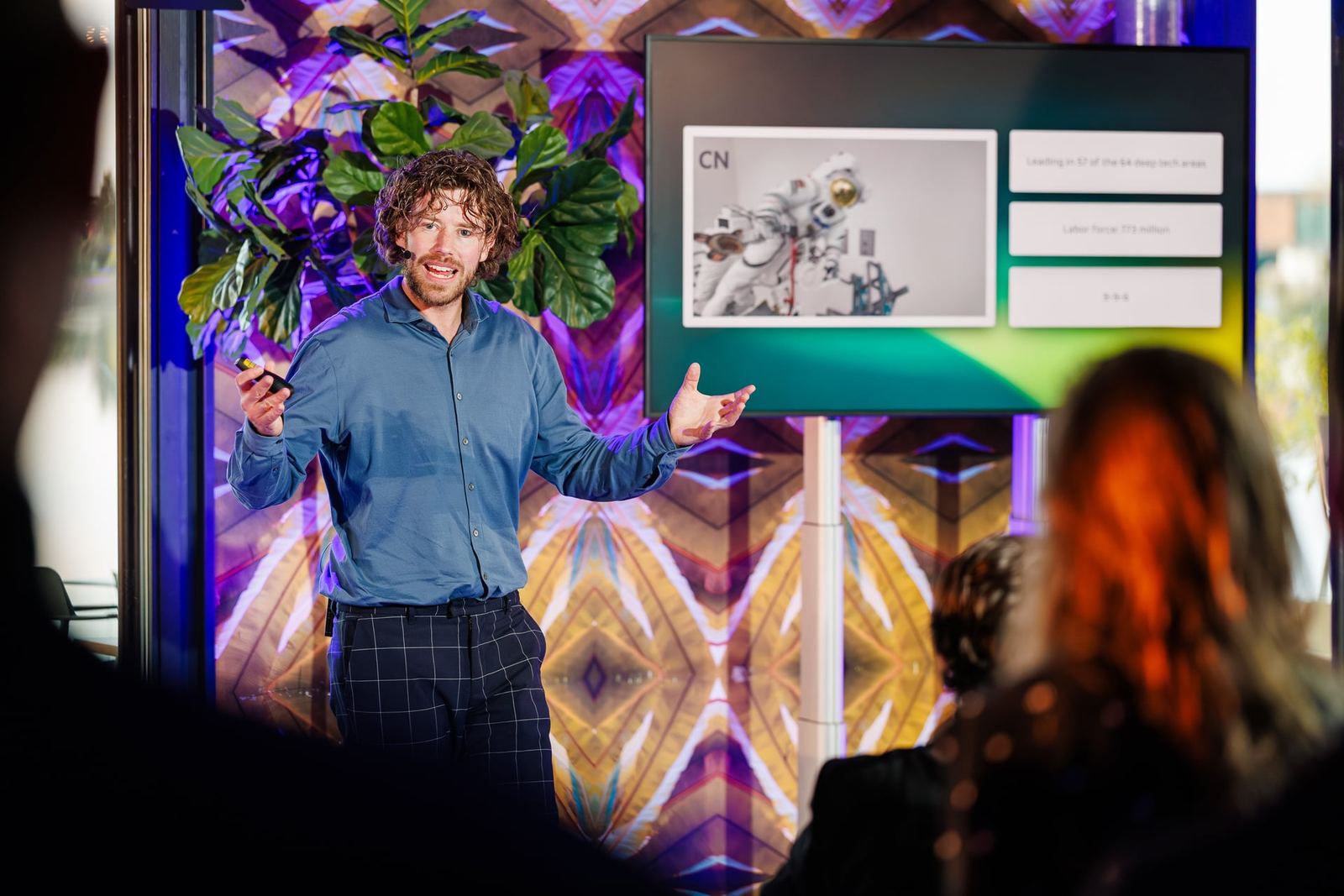
Job van den Berg is an AI keynote speaker, tech entrepreneur and author of five books on AI. He ships AI agents into production every week and delivers 150+ keynotes a year on AI agents and agentic commerce.
What are open weights and closed-source AI models? Discover the differences and the consequences for costs, privacy, data centers and the AI market.
On EditieNL I discussed whether AI could threaten humanity. About Anthropic researcher Evan Hubinger, agentic AI, the black box, and why we are building faster than we understand.
A simple AI video already costs about 4 litres of water and as much electricity as a 10-watt LED lamp burning for 42 hours. What happens with full films and commercials, and why digital is not automatically sustainable.
AI keeps getting better, yet workplace sentiment about AI is deteriorating. Research shows why adoption is as much a social challenge as a technological one: from the Matthew effect to psychological safety.