A fake bank employee in 30 seconds: the danger of AI voice fraud
Your phone rings. On the other end of the line, you hear a friendly, calm voice. “Eline from the bank speaking,” she says. She sounds professional and a little concerned. There’s supposedly a problem with your account, and to secure your money, she needs some details from you.

The conversation feels real. Trustworthy, even. And that's precisely the problem.
“Eline” doesn’t actually exist. It’s an AI voice, and these days you can create one in less than a minute.
The new face of fraud
While fraudsters used to primarily work with poorly written emails or clumsy phone calls, that looks very different now. With the help of AI, they can create voices that sound surprisingly human. Not perfect, but good enough to come across as credible, especially if you’re called unexpectedly.
In a short demonstration, such a voice was created in just thirty seconds. That's all it takes. No technical knowledge, no expensive software. Just a tool and a bit of creativity.
That makes the risk greater than ever. Because if this is already so easy, what can people do who truly invest time and energy into it? Especially if they also have personal information about you, such as your name, bank, or recent transactions.
How such a phone call works
The setup of this type of fraud is often surprisingly simple. You get a call from someone posing as an employee of your bank. There's supposedly something wrong with your account: a suspicious payment, a security issue, or a potential hack.
Pressure is then built up. You need to act quickly to prevent losing your money. The “employee” reassures you but simultaneously pushes for action. For example, by asking you to transfer money to a supposedly secure account, or to share confidential details.
It feels like you're being helped, while in reality, you're being defrauded.
What should you look out for?
Although these AI voices are getting better and better, there are still ways to recognise doubt. The most important thing is to allow yourself to remain critical, even if someone sounds convincing. A simple trick is to ask an unexpected question. For example, ask if the person can speak in another language for a moment. It doesn't even have to make sense; the point is to take the conversation off-script. AI systems can sometimes react strangely to that. You could also say something that doesn't fit into a normal conversation, such as asking if the person can go back to “default settings”. It might sound a bit odd, but it can cause an AI to misspeak or freeze.
More importantly, trust your gut feeling. If something doesn't feel quite right, there's often a good reason for it.
What banks never do
Perhaps the most important rule: a real bank will never ask you to transfer money to another account over the phone. Nor will they simply ask for sensitive information, such as full login codes or verification details.
If that happens? Then you pretty much know enough.
What should you do if in doubt?
The best reaction is also the simplest: end the call. Without discussion, without explanation. Just hang up.
Do you want to be sure if something is actually wrong? Then call your bank yourself using the official number on their website. Not via a number you were given during the call.
A new reality
AI makes a lot possible, and that's not necessarily a bad thing. But it does mean that this type of fraud is becoming increasingly sophisticated. What used to be clearly fake can now suddenly feel very real. Yet the basic principle remains the same. If someone pressures you to do something with money quickly, there's a good chance it's not legitimate.
Want to get started with AI yourself? Check out our AI Agents e-learning or AI workshops for teams.
- Concerns about AI
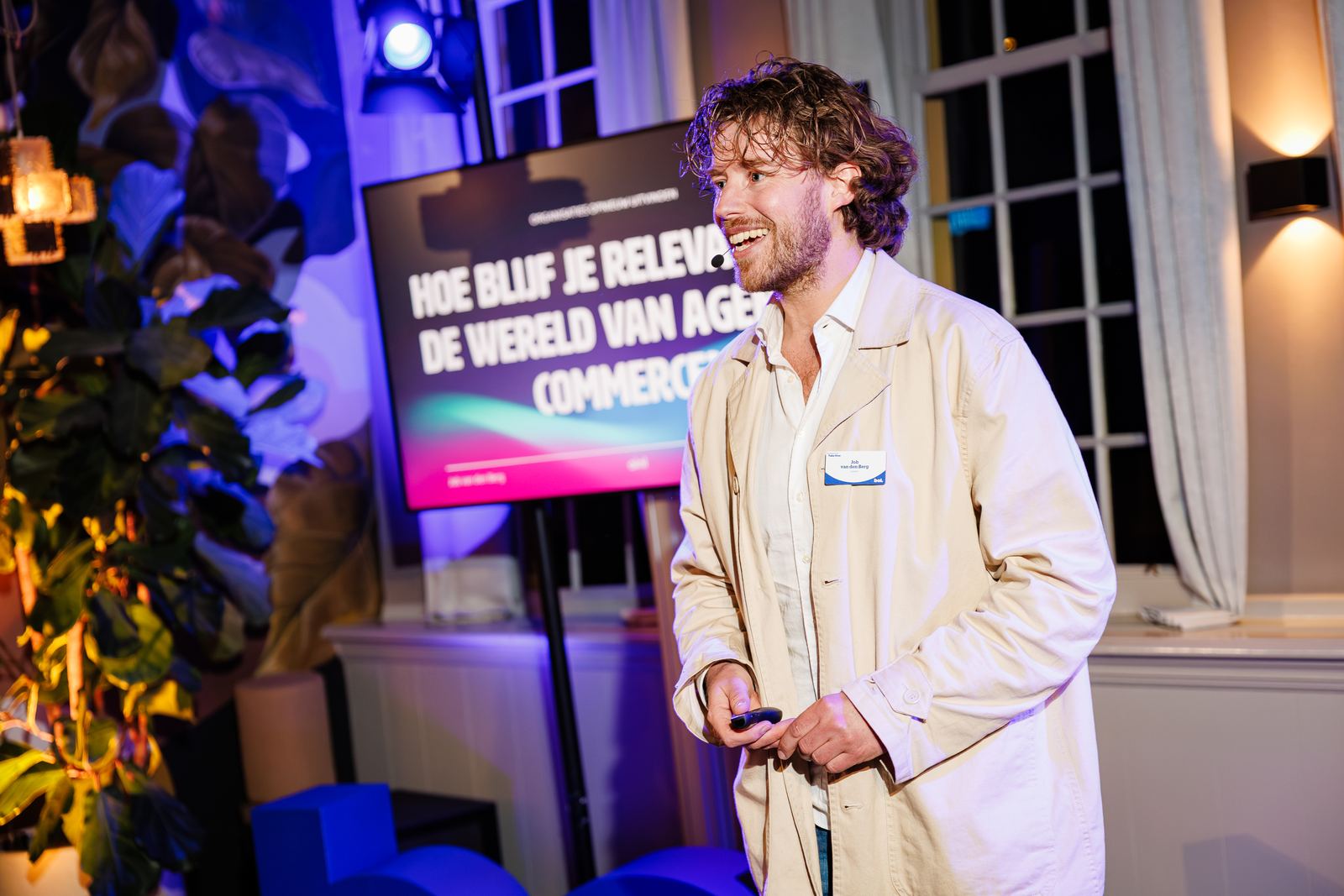

Job van den Berg is an AI keynote speaker, tech entrepreneur and author of five books on AI. He ships AI agents into production every week and delivers 150+ keynotes a year on AI agents and agentic commerce.
What are open weights and closed-source AI models? Discover the differences and the consequences for costs, privacy, data centers and the AI market.
On EditieNL I discussed whether AI could threaten humanity. About Anthropic researcher Evan Hubinger, agentic AI, the black box, and why we are building faster than we understand.
A simple AI video already costs about 4 litres of water and as much electricity as a 10-watt LED lamp burning for 42 hours. What happens with full films and commercials, and why digital is not automatically sustainable.
AI keeps getting better, yet workplace sentiment about AI is deteriorating. Research shows why adoption is as much a social challenge as a technological one: from the Matthew effect to psychological safety.