Understanding the Two Forms of AI: Predictive and Generative AI
This article is for anyone who wants to better understand the forms of AI that exist and which AI is best suited for which application. There are two main forms of AI: predictive AI and generative AI.

Predictive AI has existed for a long time and encompasses machine learning models. This AI uses large amounts of data to predict future events. For example, predicting sales, the likelihood of a customer cancelling a subscription, or economic developments in the coming years.
Why use predictive AI?
- Future insights: It helps companies predict what might happen in the future, which is crucial for strategic decision-making.
- Example: If you predict a recession is coming in two years, you can take measures now. Or if a telecom provider sees that a customer might cancel their subscription, they can offer that customer an attractive discount.
For predictive AI, you need a lot of data; both internal and external factors play a role. This makes it possible to make accurate predictions. The combination of these factors ultimately determines the accuracy of the predictions.
Practical examples:
- Shoeby: Uses predictive AI to forecast clothing sales and reduce fashion waste.
- Goudse Verzekeringen: Deploys predictive AI to reduce gas consumption.
- Picnic: Better predicts what customers will buy, leading to more efficient operations.
Generative AI has become better known with the launch of ChatGPT. These AI models are trained to generate specific outputs, such as text or images. These models are 'driven' by human language, in speech or text. Think of the chat window of ChatGPT, Gemini, or Copilot.
Why use generative AI?
- Fast output: They are pre-trained and can therefore quickly and efficiently generate text, create images, and perform other complex tasks.
- Cognitive, complex tasks: ideal for assisting with writing emails, summarising reports, scanning contracts, and analysing large amounts of data.
Practical examples:
- Architectural firm MVRDV: Uses a trained Stable Diffusion model to create designs faster.
- Picnic: Deploys generative AI to better understand what customers are looking for in their personalised shop.
- Predictive AI: used for strategic forecasts and requires a lot of data. It helps companies predict future events and make more informed decisions.
- Generative AI: known from applications like ChatGPT, but can be even more powerful when trained with company-specific data. It is ideal for complex, cognitive tasks and can serve as an assistant in daily business operations.
Would you like to learn more about how to apply these forms of AI in practice? Then check out our AI at Work series, developed with BusinessWise and DPG Media Nederland, in collaboration with production company Medianauts. Here you can see how companies such as Shoeby, Goudse Verzekeringen, and Picnic apply AI to improve their operations.
- Best AI Tools
- GEO: discoverable in AI search engines
- Writing AI Prompts

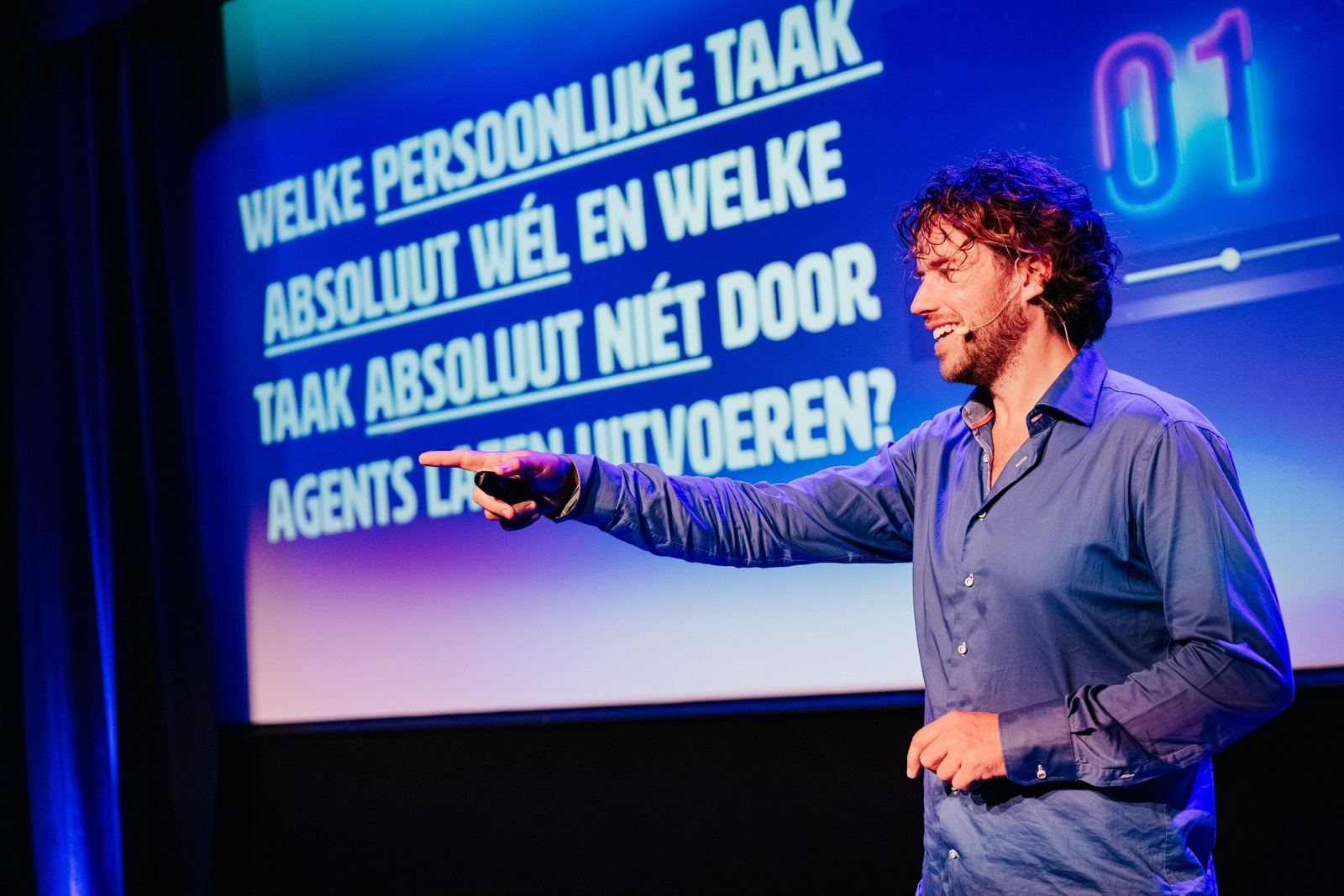
Job van den Berg is an AI keynote speaker, tech entrepreneur and author of five books on AI. He ships AI agents into production every week and delivers 150+ keynotes a year on AI agents and agentic commerce.
What are open weights and closed-source AI models? Discover the differences and the consequences for costs, privacy, data centers and the AI market.
On EditieNL I discussed whether AI could threaten humanity. About Anthropic researcher Evan Hubinger, agentic AI, the black box, and why we are building faster than we understand.
A simple AI video already costs about 4 litres of water and as much electricity as a 10-watt LED lamp burning for 42 hours. What happens with full films and commercials, and why digital is not automatically sustainable.
AI keeps getting better, yet workplace sentiment about AI is deteriorating. Research shows why adoption is as much a social challenge as a technological one: from the Matthew effect to psychological safety.