Perhaps AI will make organisations more cohesive than ever before
Why success with AI depends less on individual AI experts and more on the ability to learn together and take collective responsibility.

Why success with AI depends less on individual AI experts and more on the ability to learn together and take collective responsibility.
There are always people who talk about AI with great confidence. As if they know exactly how it works, which applications are valuable, and how organisations should deal with it. But that confidence is not always a sign of true certainty. Often, it's just a way to camouflage uncertainty.
The reality is far less clear-cut. Almost everyone is still experimenting. New models, applications, and working methods follow each other rapidly. What seems impressive today may be outdated tomorrow. Organisations try out what works, encounter limitations, and only discover along the way where AI truly adds value.
So, in a sense, everyone is still fumbling around.
And perhaps that holds an important lesson for organisations. Success with AI will likely depend less on individuals positioning themselves as AI experts, and much more on an organisation's ability to learn collectively.
AI is not an individual skill
In many organisations, AI is still approached as a personal competency. Those who can prompt well, know the latest tools, and are at the forefront of experimenting are quickly seen as having strong AI skills.
But that view is too narrow.
Of course, it's important for people to learn to use new technology. However, true value only emerges when individual experiences are shared. What worked for one employee? Where did it go wrong? What assumptions did a model make? Which sources proved reliable? When did AI save time, and when did checking it take more time?
As long as that knowledge remains only with individual users, an organisation learns very little.
That's why cohesion in experimenting with AI becomes so important. Not everyone needs to use the same tools or have the same expertise. However, a culture must emerge where people share experiences, correct each other, and collectively discover what responsible and effective use of AI means.
The organisations that ultimately become good at this are not those where everyone confidently claims to master AI. They are the organisations where people can easily say: this worked well, this went wrong, I don't understand this yet, and I need someone else for this.
From possessing knowledge to evaluating knowledge
AI also changes our relationship with knowledge.
Traditionally, expertise was often linked to how much someone knew. The expert was the one who had knowledge in their head, had accumulated extensive experience, and could therefore make better decisions.
That expertise isn't disappearing. On the contrary. It will probably become even more important. But the way we use expertise is changing.
AI can collect, summarise, compare, and interpret enormous amounts of information. As a result, simply having access to knowledge becomes less distinctive. The important question becomes: can you assess whether that knowledge is correct?
That demands something different. You need to be able to recognise which information is relevant, which sources are reliable, what assumptions underlie an analysis, and where potential errors lie. You need sufficient domain-specific knowledge to not just read an AI outcome, but to genuinely evaluate it.
So, it's increasingly less about who possesses the knowledge and more about who can curate, understand, and weigh knowledge. And ultimately, that's where responsibility comes into play.
Responsibility becomes a core skill
One of the most important professional skills in a world with increasingly powerful AI may well be the ability to take responsibility for decisions that are partly based on AI.
An AI model can perform an analysis. It can compare hundreds of documents, recognise patterns, and formulate a proposal. An AI agent might even be able to perform a next step independently. But human responsibility does not disappear with that. On the contrary.
Ultimately, someone must be willing to say: I understand the basis of this analysis, I have sufficient confidence in the knowledge used, and I stand by the decision that results from it. That is fundamentally different from saying: “The AI came up with this conclusion.”
A model cannot bear organisational responsibility. It cannot put a professional reputation at stake, make moral considerations based on an organisation's context, or account for a decision when it turns out badly. People will have to continue to do that.
That's why the ability to validate AI outcomes becomes so important. Not every detail needs to be manually re-checked, but someone needs to understand enough about the subject to take responsibility for the outcome. This makes true expertise more, rather than less, important.
Expertise takes on a different meaning
This leads to an interesting paradox. AI makes knowledge more accessible, but at the same time increases the value of people who are deeply enough invested in a subject to be able to assess the quality of that knowledge.
The expert of the future, therefore, might not be the one who always knows the answer immediately. It is the one who knows which questions need to be asked. Who can recognise when an AI model formulates something convincingly without the underlying evidence being strong enough. Who knows what expertise is missing and when a second opinion is needed. And above all: the one who ultimately dares to take responsibility.
This requires not only subject-matter knowledge but also professional judgement. Because the more information becomes available, the easier it becomes to hide behind information. There is always an analysis, dataset, model, or report to be found that supports a particular decision.
The real challenge is not to collect even more information. The challenge is to be able to say at some point: we know enough to make a choice, and we stand by that choice.
Responsibility becomes more often collective
As AI plays a larger role in important decisions, it will likely become more difficult for one person to independently oversee all relevant knowledge and risks. Decisions will therefore often require different types of expertise.
- A subject matter expert understands the domain.
- A data expert understands the information used.
- Someone else understands the legal or ethical implications.
- Yet another person knows the operational consequences.
Responsibility thereby not only becomes more important but also more often collective. This can change organisations.
Because collective responsibility requires people to engage in dialogue sooner. That assumptions are made explicit. That people dare to challenge each other. And that it becomes normal to name uncertainty before a decision is made. Precisely AI can therefore turn out to be a technology that makes collaboration more necessary.
From individual certainty to collective trust
Perhaps that is ultimately a much more interesting perspective on AI than the endless discussion about who writes the best prompts or who is the first to use the latest tool. AI forces organisations to rethink how knowledge is built, how decisions are made, and who bears responsibility for them.
This does not require a culture where everyone pretends to understand everything. The opposite is probably more effective: an organisation where people can openly state where uncertainty lies. Where experiments are shared. Where mistakes are not hidden but used to become collectively smarter. And where expertise does not mean someone is always right, but that someone understands enough to form a judgment and take responsibility for it.
Perhaps the deployment of AI will precisely make organisations more cohesive than ever before. Not because AI automatically creates connection, but because no one can fully grasp this development alone.
We will have to experiment together, build knowledge together, and increasingly take collective responsibility for the decisions that result from it. And perhaps that is precisely one of the most important AI skills of the future.
Job van den Berg is an AI keynote speaker, tech entrepreneur, and author of five books on AI. He puts agents into production himself weekly and gives 150+ keynotes per year on AI agents and agentic commerce.
Counting Cybertrucks in the back seat is not representative research. But it is a perfect example of how statistics, logical thinking, and AI come together: observe, formulate hypotheses, and above all, try to disprove them.
After half a year back in Silicon Valley, one thing stands out: the conversation is shifting from 'what can AI do?' to 'how do we truly build on it?'. Billboards about safe AI, control, and infrastructure indicate a new theme.
Hallucinations can be controlled. Much harder is reasoning that sounds logical, is partly supported by research, and yet goes further than the evidence allows. On generational differences, statistics, and methodological caution as an AI skill.
The promise of AI agents is to eliminate friction, putting ease first. But precisely in that friction, the contact that forges our social capital always arose. An essay on connection, technology, and the default setting.
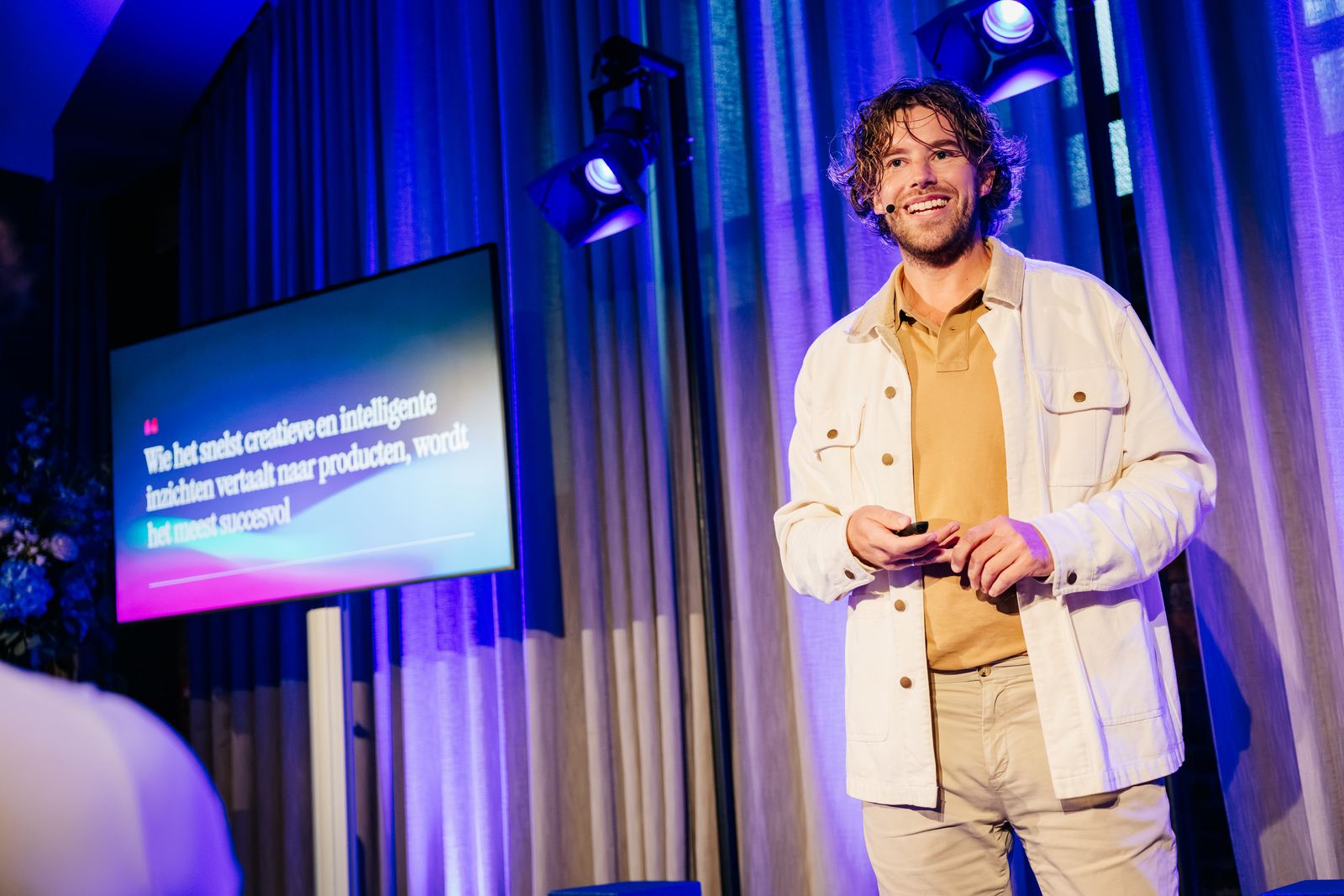
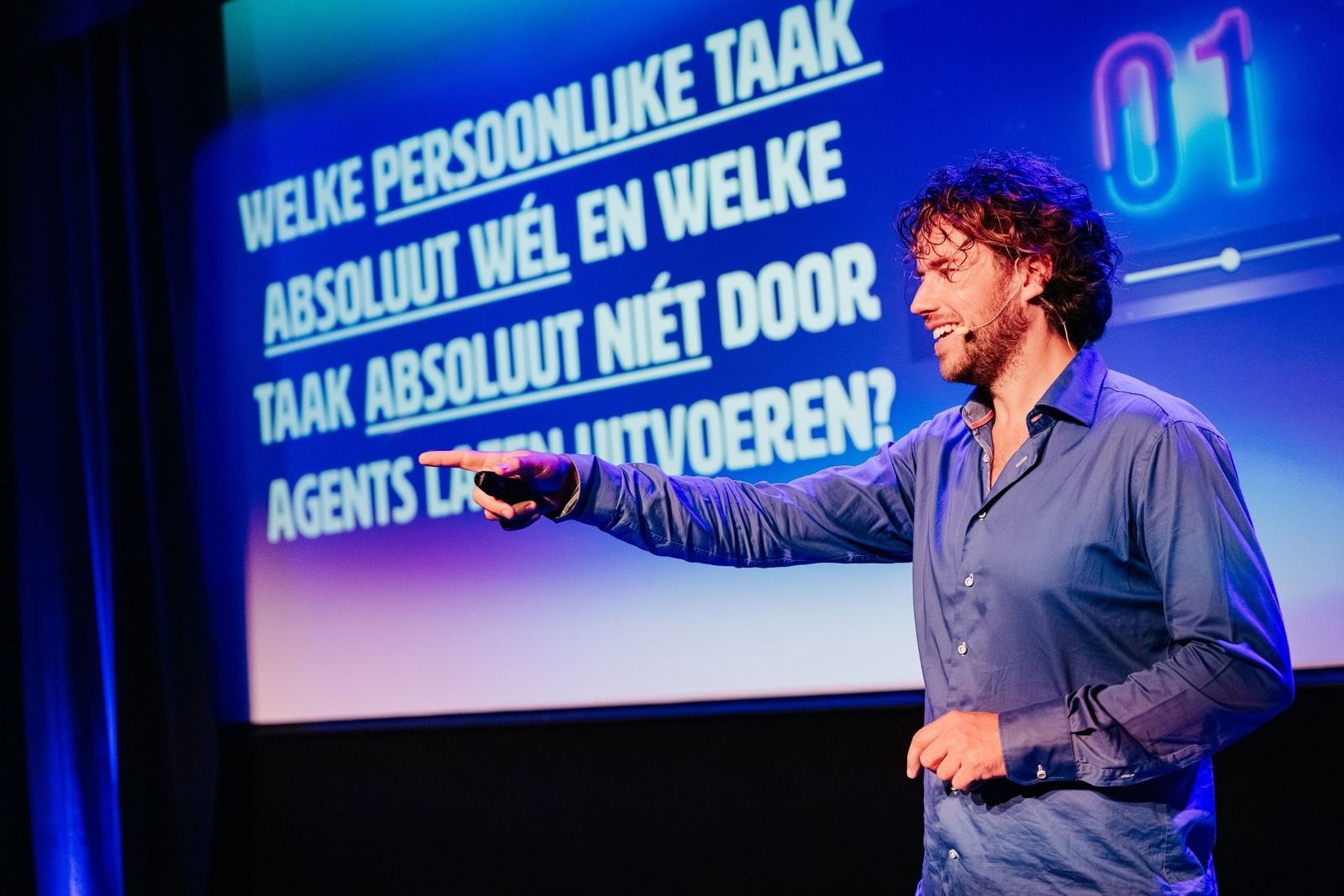
Job van den Berg is an AI keynote speaker, tech entrepreneur and author of five books on AI. He ships AI agents into production every week and delivers 150+ keynotes a year on AI agents and agentic commerce.
GPUs do the model math, CPUs keep the rest of the agent running. Why agentic AI shifts the view of data centers, and what that means for Intel, AMD and organizations deploying agents.
What are open weights and closed-source AI models? Discover the differences and the consequences for costs, privacy, data centers and the AI market.
On EditieNL I discussed whether AI could threaten humanity. About Anthropic researcher Evan Hubinger, agentic AI, the black box, and why we are building faster than we understand.
A simple AI video already costs about 4 litres of water and as much electricity as a 10-watt LED lamp burning for 42 hours. What happens with full films and commercials, and why digital is not automatically sustainable.