AI in the theatre: how smart glasses enable live translation in 223 languages
The magic of theatre lies in the spoken word, the intonation of the actors, the nuance of a dialogue. But what if you don't understand the language? Or if you are hard of hearing? Then much of that magic is lost. Until now.

Together with RTL Nederland and EditieNL, we recently had the opportunity to create a piece about a technological innovation that bridges this gap: an AI-powered headset that live translates everything said on stage into 223 languages. Not as subtitles on a distant screen, but directly onto a headset, for the eyes of the attendee.
✨ Technology that makes theatre more inclusive
Inclusivity in culture has become an increasingly frequent topic of discussion in recent years. Language barriers and hearing impairments still pose an obstacle for many people to enjoy live performances. These AI glasses change that.
Using speech recognition and automatic translation, the system captures what actors say live, converts it into text, and projects it almost immediately onto the glasses. Visitors who would otherwise literally and figuratively miss out on the story can now fully immerse themselves in the performance in their own language, at their own pace.
🔍 How exactly does it work?
To demonstrate how the technology works, we did a short demo during the filming at RTL with:
- ChatGPT Advanced Voice Mode, to make the system respond to spoken prompts.
- Whisper, OpenAI’s powerful speech-to-text model.
- And a simple prompt to guide the process: from spoken word to translated subtitles.
Whisper listens to the input from the actors and transcribes it at lightning speed. Then ChatGPT translates the text in real-time into a chosen language. The result appears on the user's spectacle lens as if you were watching a live subtitled film, but entirely tailored to the performance and the language of your choice.
And honestly: our attempt at a live demo wasn't entirely flawless 😅 a perfect illustration that technology is under development, but already shows incredible potential.
🌍 223 Languages, one headset: why this matters
The fact that the headset supports over 200 languages is no trivial detail. It opens the door to a culturally more inclusive experience, especially in cities with many international residents and tourists. And for deaf and hard-of-hearing individuals, it offers an accessible way to follow the performance, without being dependent on a limited number of special performances per season.
Accessibility thus becomes the standard, rather than the exception.
🎤 The role of AI in cultural innovation
What makes this application particularly special is how AI is used in a concrete, human way. No abstract future vision or advanced applications solely for tech companies, but tangible innovation in the public domain: art and culture.
The headset shows that AI doesn't just have to be disruptive or commercial but can also connect, support, and above all: make what was previously closed, more inclusive.
- Best AI tools
- GEO: discoverable in AI search engines
- Writing AI prompts
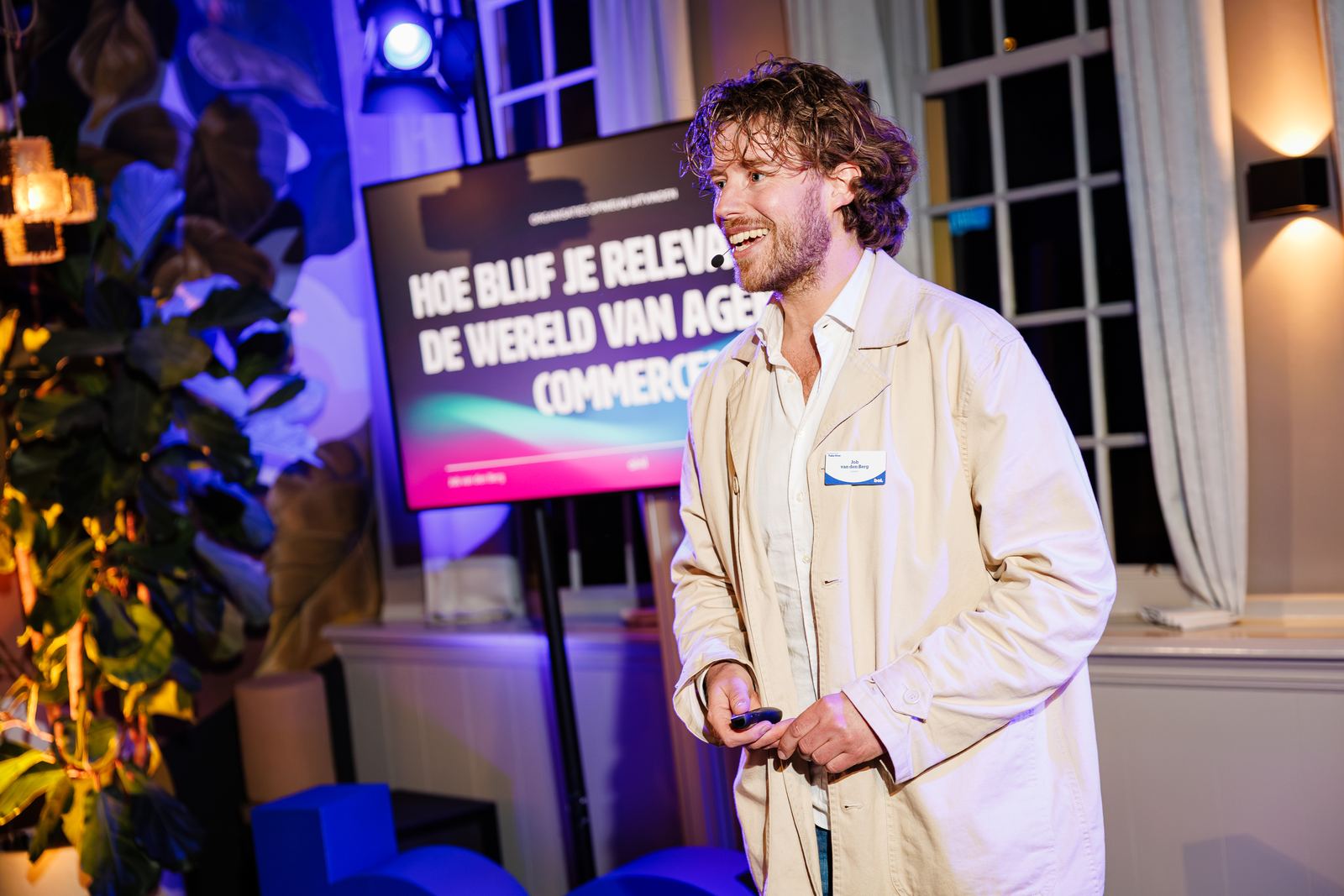

Job van den Berg is an AI keynote speaker, tech entrepreneur and author of five books on AI. He ships AI agents into production every week and delivers 150+ keynotes a year on AI agents and agentic commerce.
What are open weights and closed-source AI models? Discover the differences and the consequences for costs, privacy, data centers and the AI market.
On EditieNL I discussed whether AI could threaten humanity. About Anthropic researcher Evan Hubinger, agentic AI, the black box, and why we are building faster than we understand.
A simple AI video already costs about 4 litres of water and as much electricity as a 10-watt LED lamp burning for 42 hours. What happens with full films and commercials, and why digital is not automatically sustainable.
AI keeps getting better, yet workplace sentiment about AI is deteriorating. Research shows why adoption is as much a social challenge as a technological one: from the Matthew effect to psychological safety.