AI Agents: the solution to the biggest data problem
When it comes to data, quality is more important than quantity. Companies are collecting more and more data, but are struggling with a fundamental problem: data quality. Incomplete, incorrect or inconsistent data leads to wrong insights, inefficient processes and missed opportunities.

Many organisations invest in data teams and advanced software to solve these challenges, but the reality is that the volume of incoming data is growing too fast to manage manually. This is where AI agents come in – the silent revolution that helps with data analysis and elevates data quality to a higher level.
Why is data quality such a big problem?
Companies rely on data to make decisions, but often that data turns out to be full of errors. Common problems include:
- Duplicates: Multiple versions of the same data cause confusion and incorrect analyses.- Input errors: Typos or incorrect formats make data unreliable.- Missing information: Incomplete datasets limit the usability of analyses.- Outdated data: Data changes continuously but is often not automatically updated.
Traditional data cleaning methods are time-consuming and costly. AI agents offer a game-changing solution here.
How AI agents improve data quality
AI agents are smart, autonomous systems that can process, check and improve data in real-time. They play an active role in managing, enriching and validating data, drastically reducing human errors.
1. Automatic error detection and correction
AI agents can recognise patterns and detect inconsistencies that are difficult for humans to see. For example, in a customer database, an email address might be misspelled – an agent can automatically suggest correcting this based on known patterns.
2. Real-time checking of incoming data
Instead of discovering data errors after the fact, AI agents can intervene immediately. For example:When entering a customer number, an agent can immediately check if the number already exists.When an invoice arrives, an agent can automatically check if the amounts match previous invoices.
3. Smart data enrichment
AI agents can supplement missing information by combining data from multiple sources. For example, in an HR system where an employee has not entered a job title, the agent can automatically fill this in based on contract information or LinkedIn profiles.
4. Automated data verification
AI agents can continuously validate and keep data up-to-date. This is important for sectors such as healthcare, where incorrect patient data can have fatal consequences. An AI agent can, for example, check whether medication prescriptions match medical records.
Read also: The end of SaaS? How AI agents are shaping the future of software
New opportunities through better data
Improving data quality goes beyond reducing errors – it also opens the door to new innovations. Reliable data means better analyses, more efficient processes and even completely new applications.
Marketing & sales: Personalisation becomes more effective when you can rely on accurate customer data.Finance & compliance: AI agents can help keep financial data accurate and consistent, which is necessary for audits and reporting.Healthcare: Error-free patient data ensures better diagnoses and more efficient care.
Read also: IT as the new HR? How AI Agents are turning the workplace upside down
The future: data that improves itself
What if databases are no longer static storage places, but smart systems that actively think along? AI agents ensure that data is processed faster, and moreover, becomes more reliable and valuable.
The problem of data quality is not new, but the solution is. AI agents can fundamentally change the way we work with data – and that is a huge opportunity for companies ready for the next step.
Watch the video with Bob van Luijt from Weaviate. This article resulted from an interview with him:
- Best AI tools
- GEO: discoverable in AI search engines
- Writing AI prompts

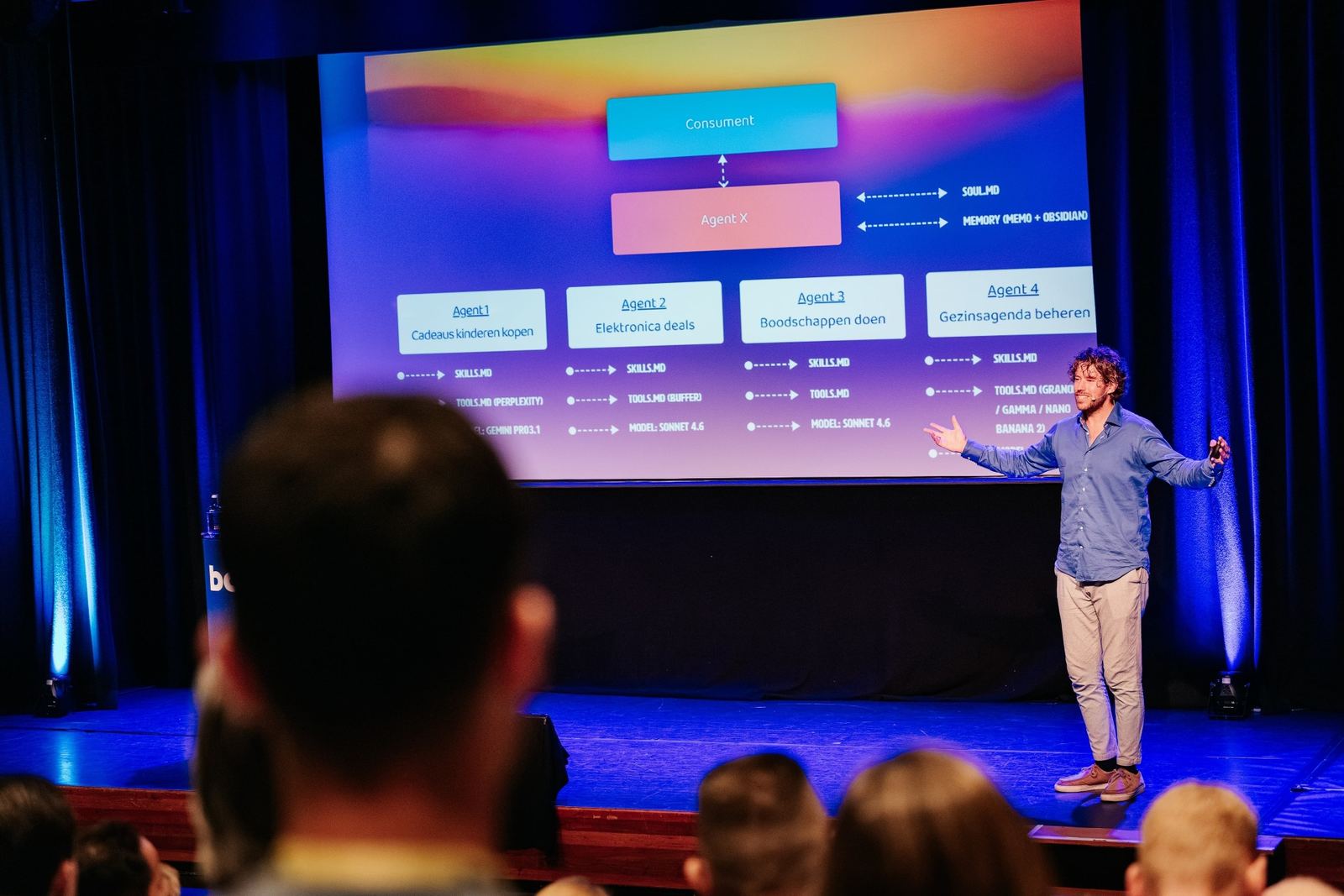
Job van den Berg is an AI keynote speaker, tech entrepreneur and author of five books on AI. He ships AI agents into production every week and delivers 150+ keynotes a year on AI agents and agentic commerce.
What are open weights and closed-source AI models? Discover the differences and the consequences for costs, privacy, data centers and the AI market.
On EditieNL I discussed whether AI could threaten humanity. About Anthropic researcher Evan Hubinger, agentic AI, the black box, and why we are building faster than we understand.
A simple AI video already costs about 4 litres of water and as much electricity as a 10-watt LED lamp burning for 42 hours. What happens with full films and commercials, and why digital is not automatically sustainable.
AI keeps getting better, yet workplace sentiment about AI is deteriorating. Research shows why adoption is as much a social challenge as a technological one: from the Matthew effect to psychological safety.